Water Tank Cleaning Dubai: The Complete Guide to Safe, Clean Water in Your Home
Every Dubai home stores water in tanks that collect sediment and bacteria. Learn why regular tank cleaning is essential and how to get it done right.
European Technical13 March 202616 min read3,640 views
Every villa and apartment building in Dubai stores water in tanks before it reaches your taps. That water sits - sometimes for days - in a container that collects sediment, grows biofilm, and breeds bacteria if nobody maintains it.
Most residents never think about it until the water starts tasting odd or someone in the household falls ill. By then, the problem has been festering for months.
This guide covers everything a Dubai resident or property manager needs to know about water tank cleaning: what it costs, how the process works, what Dubai Municipality requires, and how to tell when your tank is overdue for attention. For more details, see our guide on deep cleaning in Silicon Oasis. For more details, see our guide on cleaning in Discovery Gardens.
Why Water Tank Cleaning Matters in Dubai
Dubai's climate creates conditions that accelerate water tank contamination. Summer temperatures regularly exceed 45°C, and rooftop tanks absorb that heat directly. Warm, stagnant water is the ideal breeding ground for bacteria - including Legionella, E. coli, and coliform bacteria.
DEWA (Dubai Electricity and Water Authority) delivers treated, desalinated water that meets WHO standards at the point of supply. But once that water enters your building's storage system, the responsibility for its quality shifts entirely to you - the property owner or building management.
What happens inside a neglected water tank:
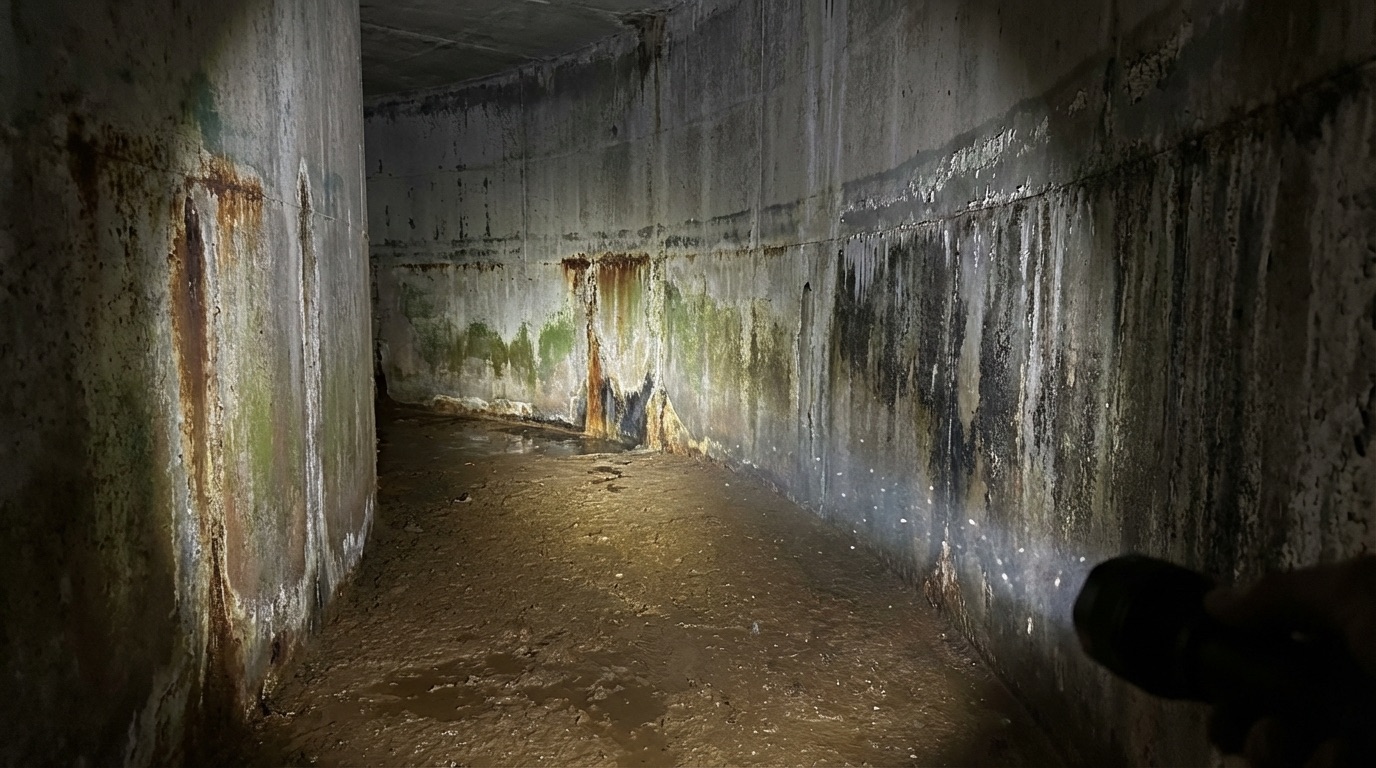
Sediment accumulation - Sand, dust, and rust particles settle at the bottom over time, creating sludge that harbours microorganisms
Biofilm formation - A thin, slimy layer of bacteria coats the inner walls, resistant to simple rinsing
Algae growth - Tanks exposed to even indirect sunlight develop algae, particularly in poorly sealed overhead tanks
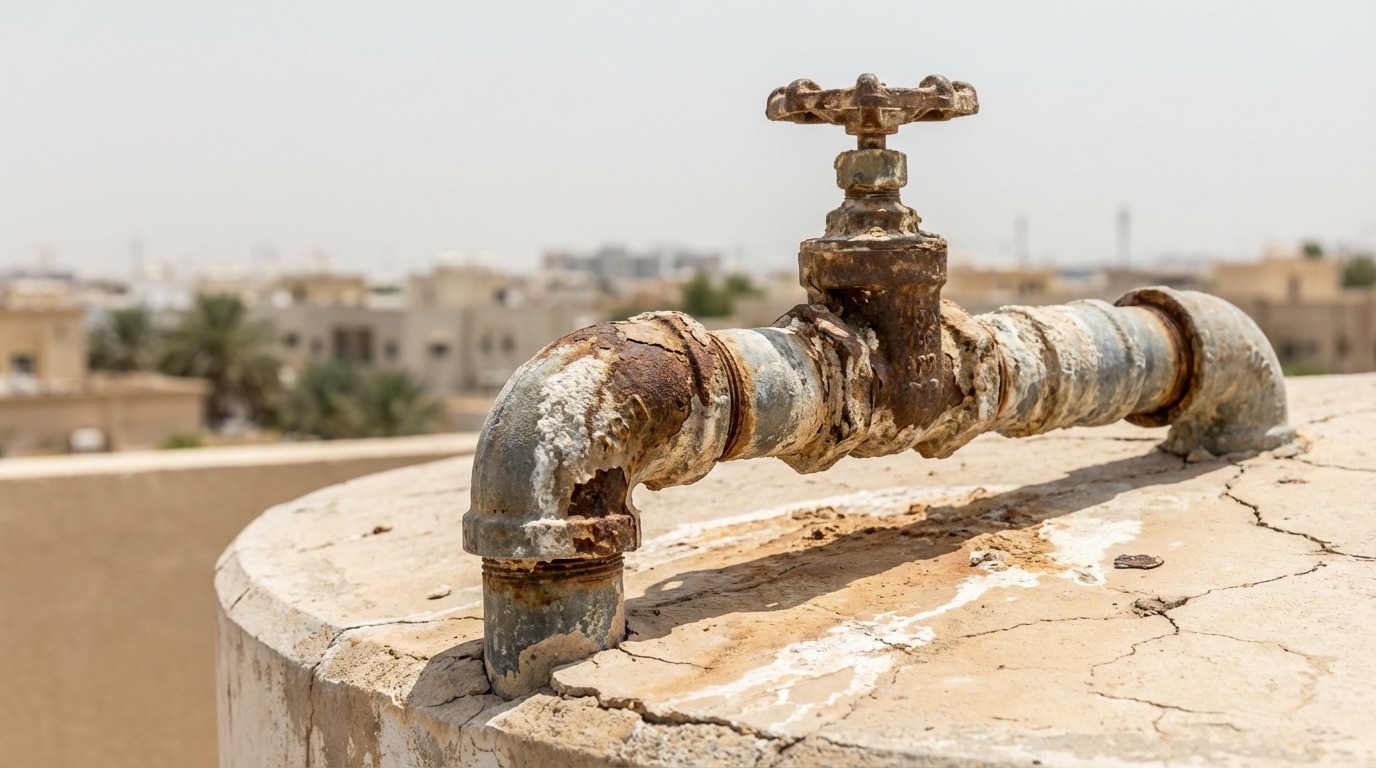
Corrosion and scaling - Metal fittings and concrete walls deteriorate, introducing particles into your water supply
Pest contamination - Improperly sealed tanks attract insects, lizards, and in extreme cases, rodents
None of this is hypothetical. It happens in thousands of Dubai properties every year.
Types of Water Tanks in Dubai Properties
Understanding your tank type matters because it affects cleaning methods, pricing, and maintenance frequency.
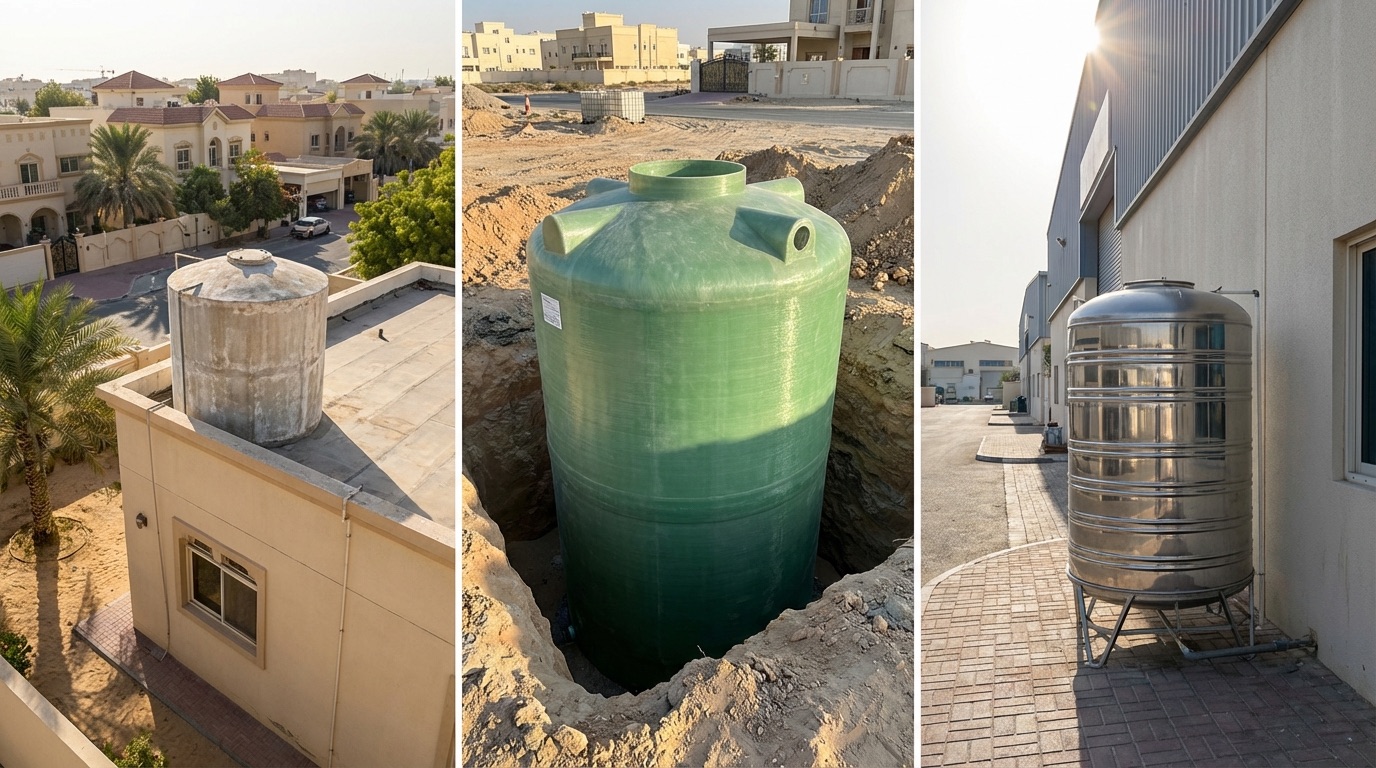
The most common tank type in Dubai villas and mid-rise buildings. GRP tanks are modular - assembled from bolted panels - lightweight, and corrosion-resistant. They range from 500 litres to 100,000+ litres.
Pros: Durable, lightweight, resistant to corrosion and UV degradation
Cons: Panel joints can develop leaks over time; internal surfaces can still develop biofilm
Cleaning notes: Requires careful scrubbing to avoid damaging the gelcoat lining
Concrete/Cement Tanks
Common in older villas and large commercial buildings. These are built into the structure - often underground - and can hold enormous volumes.
Pros: Extremely durable, good insulation, long lifespan
Cons: Porous surfaces trap bacteria; prone to cracks and lime scaling; difficult to access for cleaning
Cleaning notes: Requires high-pressure washing and thorough disinfection due to surface porosity
Polyethylene (Plastic) Tanks
Found in smaller villas, worker accommodations, and as supplementary rooftop tanks. Available from 200 to 10,000 litres.
Pros: Affordable, lightweight, easy to install and replace
Cons: Degrades faster in UV/heat; thinner walls mean more heat transfer to stored water
Cleaning notes: Easier to clean than concrete; handle carefully to avoid scratching interior surfaces
Stainless Steel Tanks
Used in some premium villas and commercial properties. Less common in residential settings due to cost.
Cons: Expensive; can develop pitting corrosion in high-chlorine environments
Cleaning notes: Smooth surfaces make cleaning easier; avoid abrasive tools that could scratch
Overhead vs. Underground Tanks
Most Dubai villas have a two-tank system:
Underground tank - Receives water from the DEWA main supply. Typically larger (2,000-10,000 litres). Stays cooler but is harder to access for inspection and cleaning.
Overhead/rooftop tank - Pumped up from the underground tank. Smaller (500-2,000 litres). Exposed to direct sun and heat. Needs more frequent attention.
Both tanks need cleaning. Neglecting the underground tank while cleaning only the rooftop tank defeats the purpose entirely.
Signs Your Water Tank Needs Cleaning
Don't wait for a schedule. If you notice any of these, arrange cleaning immediately:
Discoloured water - Yellow, brown, or cloudy water from taps
Unusual smell - Musty, earthy, or chlorine-like odours stronger than normal
Strange taste - Metallic, bitter, or stale taste
Visible particles - Sediment, flakes, or floating matter in a glass of water
Skin irritation - Rashes, itching, or dryness after bathing
Recurring illness - Unexplained stomach issues, particularly among children or elderly family members
Low water pressure - Sediment buildup can partially block pipes and pump inlets
Algae visible on or near the tank - Indicates light penetration and organic growth
It has been more than 6 months since the last cleaning
Any single symptom warrants investigation. Multiple symptoms mean the tank is overdue.
Health Risks of a Dirty Water Tank
This isn't about aesthetics. Contaminated tank water poses genuine health risks:
Bacterial Infections
Legionella pneumophila - Causes Legionnaires' disease, a severe form of pneumonia. Thrives in warm water between 25-45°C - exactly the temperature range inside Dubai rooftop tanks during summer.
E. coli and coliform bacteria - Indicate faecal contamination. Cause gastroenteritis, urinary tract infections, and in severe cases, kidney failure.
Pseudomonas aeruginosa - Causes skin infections, ear infections, and respiratory issues. Common in biofilm on tank walls.
Parasitic Contamination
Giardia and Cryptosporidium can survive in tank environments, causing prolonged diarrhoeal illness - particularly dangerous for children under five.
Chemical Contamination
Corrosion products (rust, lead from older fittings) leach into stored water. Long-term exposure to elevated heavy metals causes neurological and developmental issues.
Allergic Reactions
Mould spores and algae that develop in poorly maintained tanks become airborne during showering, triggering respiratory allergies and aggravating asthma.
The people most vulnerable are children, pregnant women, elderly residents, and anyone with a compromised immune system. In a Dubai villa housing a family, this isn't a risk to take casually.
Dubai Municipality Regulations for Water Tank Cleaning
Dubai Municipality takes water tank hygiene seriously. What the regulations require:
Mandatory Cleaning Frequency
Dubai Municipality mandates that all water storage tanks - residential and commercial - must be cleaned and disinfected at least once every six months. Some sources cite annual cleaning as the minimum, but the current guidelines from the Food Safety Department specify a six-month cycle for best compliance.
Approved Cleaning Companies Only
You can't legally have just anyone clean your water tank. Dubai Municipality requires that:
The cleaning company must hold Dubai Municipality Food Safety Department approval
Technicians must be trained and certified in confined field entry and water tank hygiene
The company must use approved, non-toxic disinfectants and biocides
A cleaning and disinfection certificate must be issued after each service
Water Quality Testing
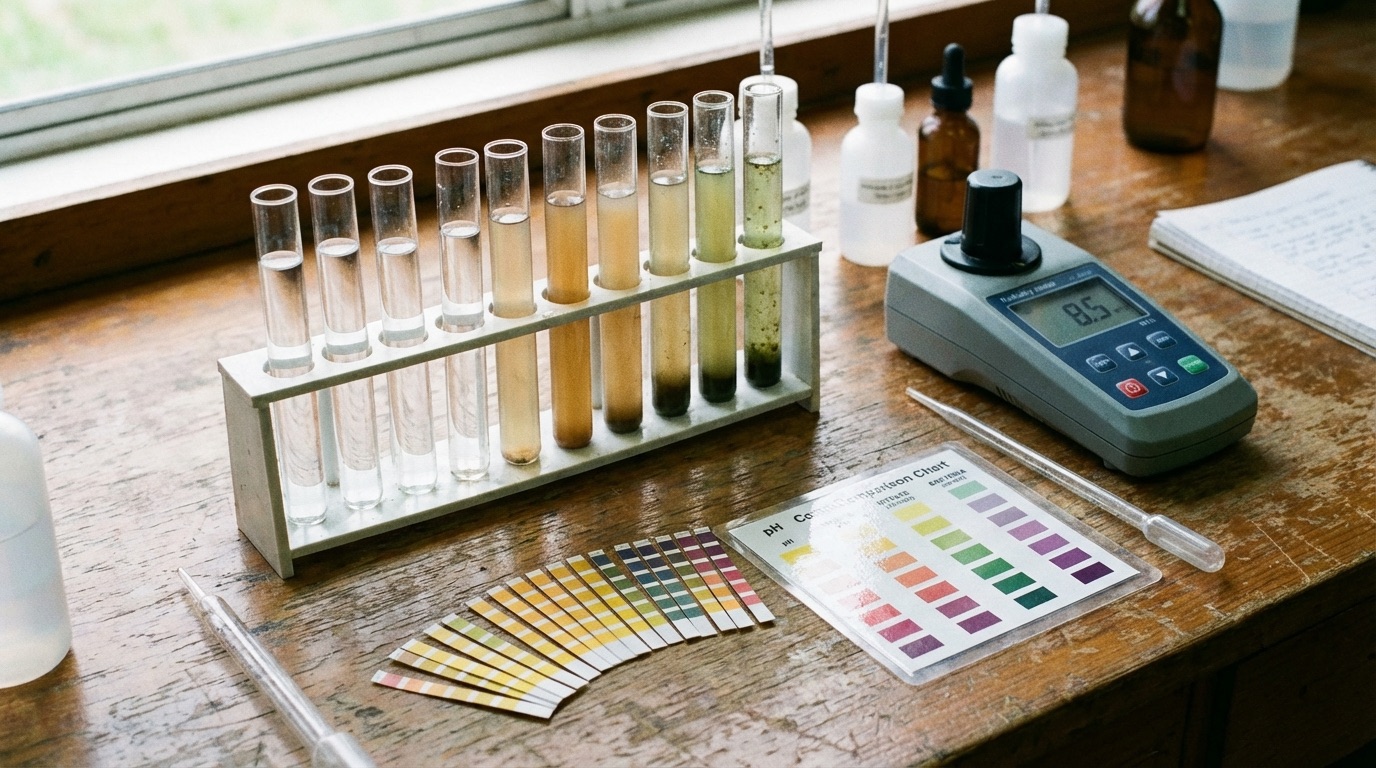
After cleaning, the service provider should conduct water sampling. The water must meet Dubai Municipality standards for:
Residual chlorine levels (0.2-0.5 mg/L at the tap)
Total coliform count (zero per 100ml)
E. coli (zero per 100ml)
Turbidity, pH, and total dissolved solids within acceptable limits
Record Keeping
Property owners and building managers must maintain records of:
Dates of cleaning and disinfection
Certificate copies from the approved cleaning company
Water quality test results
Any repairs or maintenance performed on the tank
Penalties for Non-Compliance
Dubai Municipality conducts inspections, particularly of commercial properties, hotels, restaurants, and labour accommodations. Non-compliant properties face:
Warning notices
Fines (amounts vary by severity and property type)
Potential closure orders for commercial establishments
Liability if contaminated water causes illness
For villa owners, there's no routine inspection - but if a tenant or family member falls ill and the tank is found to be neglected, the property owner bears legal responsibility.
The Professional Water Tank Cleaning Process: Step by Step
What a legitimate, Dubai Municipality-approved cleaning service actually does. This isn't a five-minute rinse - it's a structured procedure.
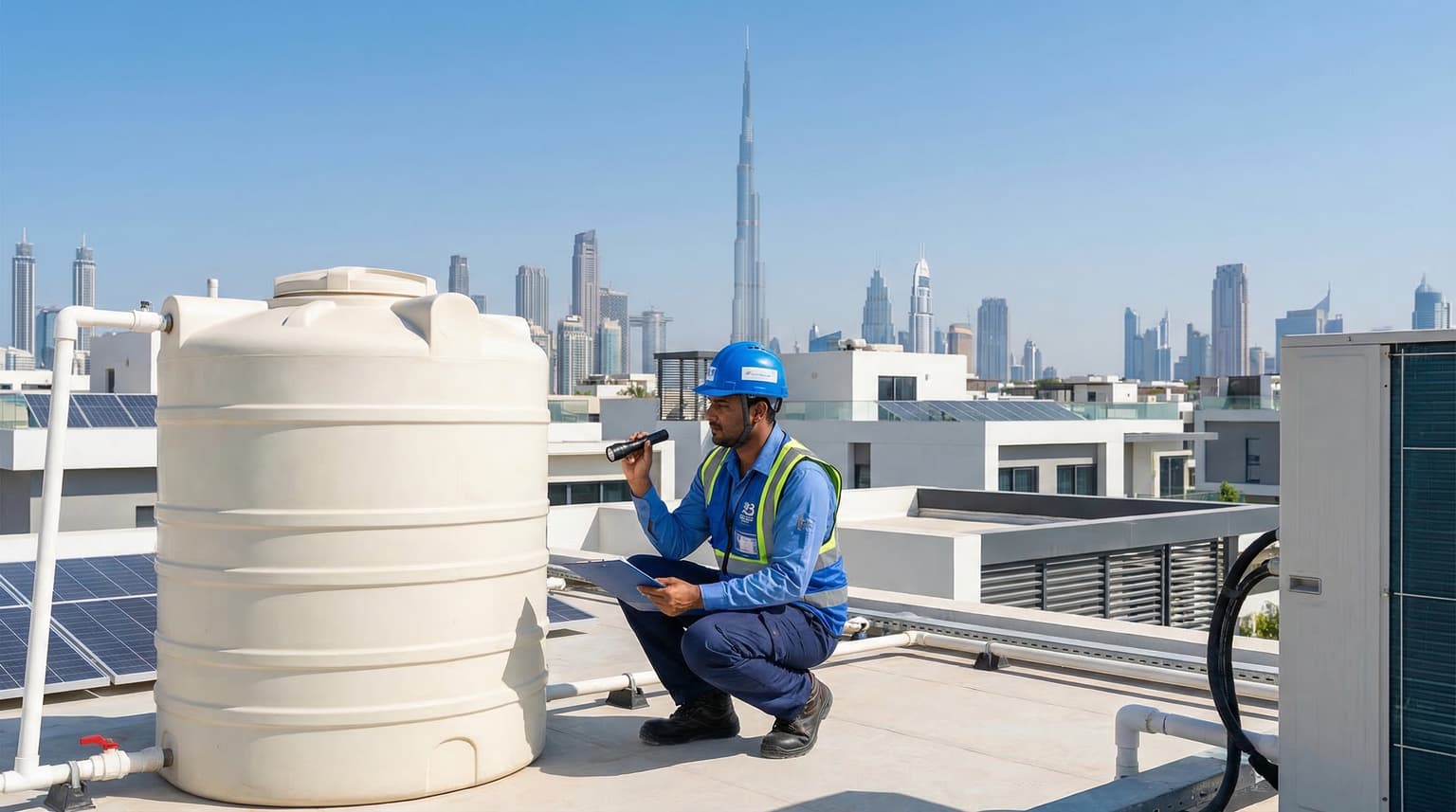
Step 1: Initial Inspection
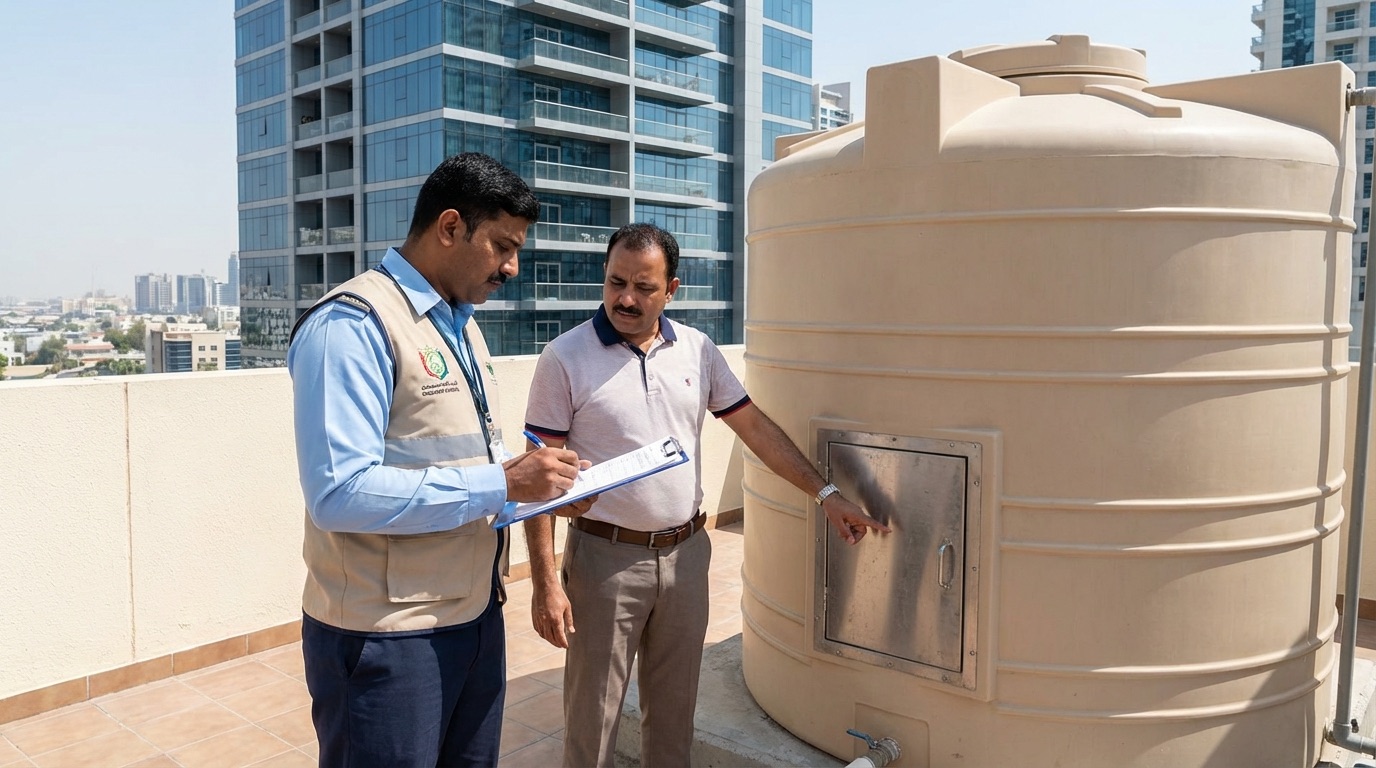
The technician assesses the tank before beginning:
Tank type, material, and capacity
Current water level and condition
Access points and confined field requirements
Visible signs of contamination, damage, or structural issues
Condition of inlet/outlet valves, float valves, and overflow pipes
Step 2: Isolating and Draining the Tank
The water supply to the tank is shut off
The tank is completely drained using pumps or gravity
Remaining sludge and sediment at the bottom is removed
Residents should be informed in advance - draining takes the tank offline for 3-6 hours depending on size and condition.
Step 3: Manual Scrubbing and Debris Removal
Technicians enter the tank (with proper confined field safety equipment)
Interior walls, floor, and ceiling are scrubbed manually using brushes and non-toxic cleaning agents
Stubborn biofilm, algae, and scale deposits are removed
All debris is collected and disposed of properly
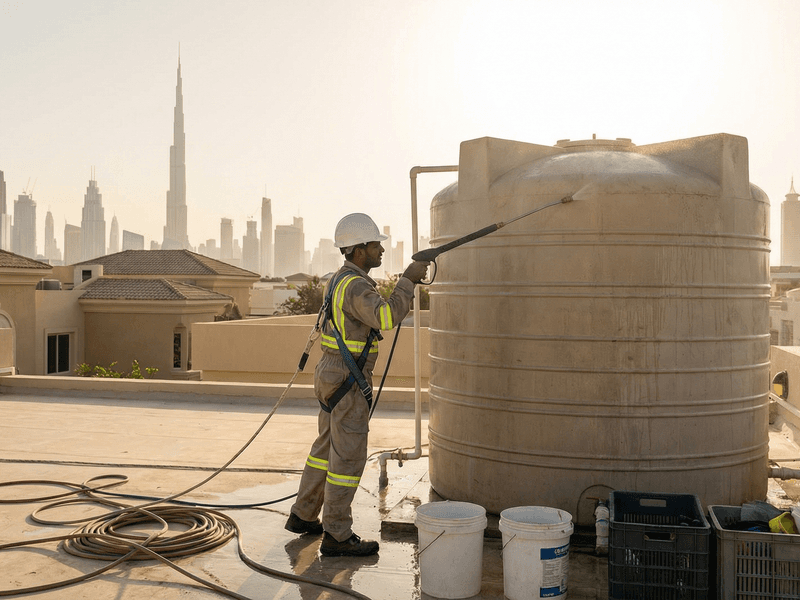
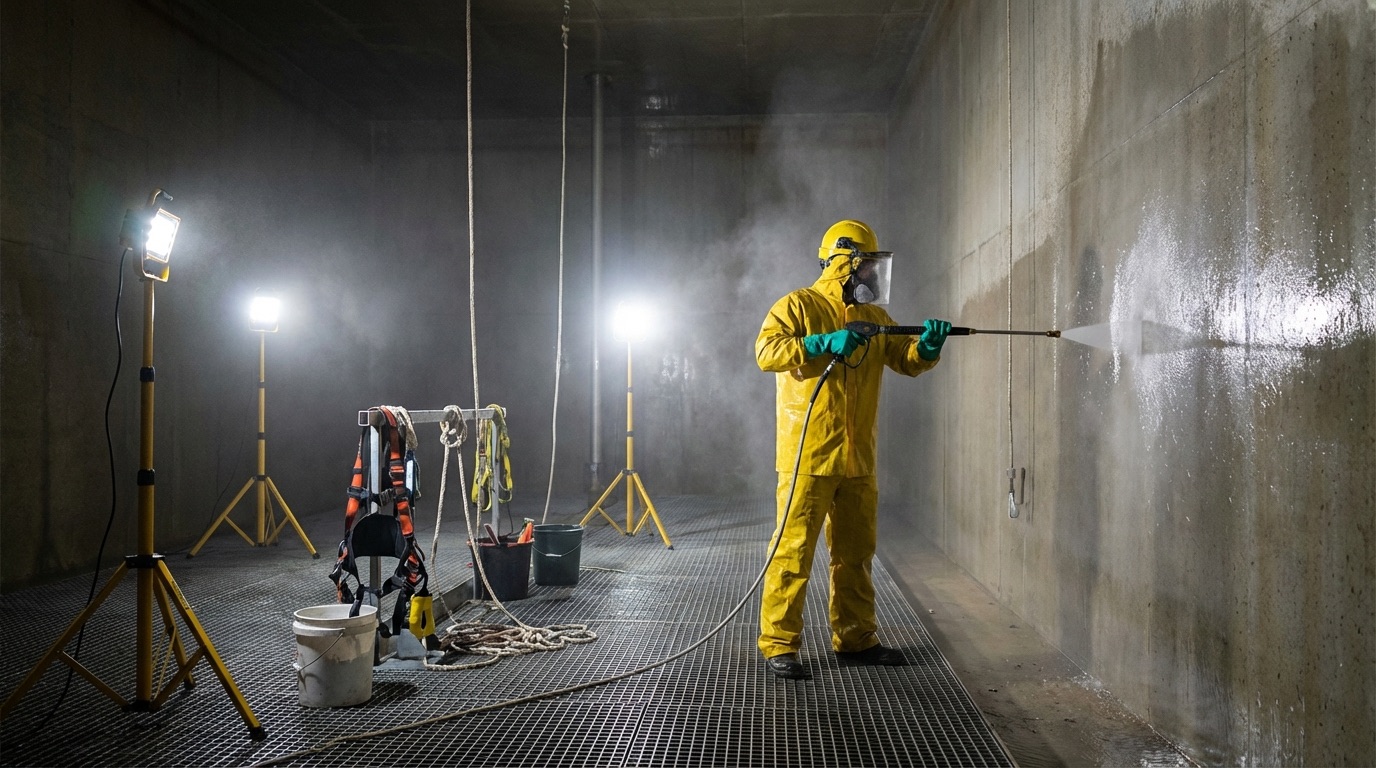
Step 4: High-Pressure Washing
A high-pressure washer (typically 100-150 bar) is used to clean all surfaces thoroughly
This removes residual biofilm and particles that manual scrubbing misses
Particular attention to corners, joints, and areas around inlets/outlets
Step 5: Disinfection and Chlorination
The tank is filled with a chlorine solution at a concentration of 50 mg/L (or as specified by Dubai Municipality guidelines)
The solution must remain in contact with all surfaces for a minimum of one hour (some protocols specify two hours)
This contact time is critical - it ensures bacteria, viruses, and parasites are killed
Step 6: Final Rinse and Refill
The chlorine solution is drained completely
The tank is rinsed with clean water until residual chlorine drops to safe levels (0.2-0.5 mg/L)
The tank is refilled from the mains supply
Step 7: Water Quality Testing
Samples are taken from the tank and at least one tap point
Tested for residual chlorine, coliform bacteria, E. coli, turbidity, and pH
Results must meet Dubai Municipality drinking water standards
Step 8: Documentation and Certificate
The cleaning company issues a Cleaning and Disinfection Certificate
This certificate should include: date, tank location, capacity, cleaning method, disinfectant used, water test results, and the technician's details
Keep this certificate - you may need it for municipality inspections or tenancy disputes
The entire process takes 3-8 hours depending on tank size, condition, and accessibility. For a standard villa with two tanks (one underground, one overhead), expect approximately 4-5 hours.
How Often Should You Clean Your Water Tank?
The baseline is Dubai Municipality's requirement: every six months minimum.
But, some situations demand more frequent cleaning:
Situation
Recommended Frequency
Standard villa (family of 4-6)
Every 6 months
Villa with rooftop tank in direct sun
Every 4-6 months
Property vacant for 2+ weeks
Clean before reoccupying
After any plumbing repairs
Clean immediately
Older concrete tanks (10+ years)
Every 4 months
Buildings with multiple units sharing tanks
Every 4-6 months
Commercial kitchens, restaurants, hotels
Every 3-4 months
Worker accommodations
Every 3-4 months
Summer months (May-September) are when tanks are most vulnerable. The combination of extreme heat and higher water usage means bacteria multiply faster while tanks cycle through water more quickly. Schedule at least one cleaning before summer begins.
DIY vs. Professional Water Tank Cleaning
Can You Clean Your Own Water Tank?
Technically, yes - for small rooftop tanks. Practically, there are serious limitations:
What you can do yourself:
Drain and scrub a small (under 500L) accessible rooftop tank
Use household bleach (unscented sodium hypochlorite) at the correct dilution for basic disinfection
Inspect for visible signs of contamination
What requires a professional:
Underground tanks - Confined field entry is dangerous without proper training and equipment. People die in tanks from toxic gas buildup and oxygen depletion. This isn't an exaggeration.
Large tanks (1,000L+) - Require high-pressure equipment and proper drainage
Dubai Municipality compliance - DIY cleaning doesn't produce a valid certificate. If you're a landlord, this matters for legal compliance.
Water quality testing - You can't verify bacterial levels without labouratory analysis
Structural assessment - Professionals identify cracks, leaks, and corrosion you would miss
The bottom line: For anything beyond a small, easily accessible rooftop tank, hire a Dubai Municipality-approved company. The cost is modest compared to the health risk and legal exposure of improper cleaning.
Water Tank Cleaning Costs in Dubai: Full Breakdown
Pricing depends on tank type, size, accessibility, and condition. What the Dubai market looks like in 2026:
Residential Water Tank Cleaning Prices
Tank Size
Price Range (AED)
Notes
Up to 500 litres
AED 300-500
Small rooftop tanks, single villa
500-1,000 litres
AED 400-600
Standard villa overhead tank
1,000-2,000 litres
AED 500-800
Larger villa or dual tank system
2,000-5,000 litres
AED 700-1,200
Villa underground + overhead combination
5,000-10,000 litres
AED 1,000-1,800
Large villa or small building
10,000+ litres
AED 1,500-3,000+
Commercial or multi-unit residential
What Affects the Price
Tank accessibility - Underground tanks with limited access hatches cost more due to confined field protocols
Current condition - A heavily contaminated tank with thick sludge requires more labour and time
Number of tanks - Most companies offer discounts when cleaning multiple tanks in one visit
Location within Dubai - Some companies charge a call-out premium for outer areas (Dubai South, Dubailand, etc.)
Water quality testing - Basic testing is usually included; labouratory-grade analysis may cost AED 200-500 extra
Emergency/same-day service - Expect a 30-50% premium for urgent bookings
Annual Maintenance Packages
Many companies offer annual contracts that reduce per-visit costs:
Package Type
Typical Cost (AED/year)
Includes
Basic (2 cleanings/year)
AED 800-1,200
Cleaning + disinfection + certificate
Standard (2 cleanings + testing)
AED 1,200-1,800
Above + water quality lab reports
Premium (quarterly service)
AED 2,000-3,500
4 visits + testing + priority scheduling
Annual packages make financial sense - the per-service cost drops by 15-25%, and you never have to remember to book.
What Should Be Included in the Price
When comparing quotes, make sure the following are included at no extra charge:
Complete draining and sludge removal
Manual scrubbing of all interior surfaces
High-pressure washing
Chlorination/disinfection with Dubai Municipality-approved chemicals
Final rinse and refill
Basic water quality cheque (residual chlorine at minimum)
Cleaning and Disinfection Certificate
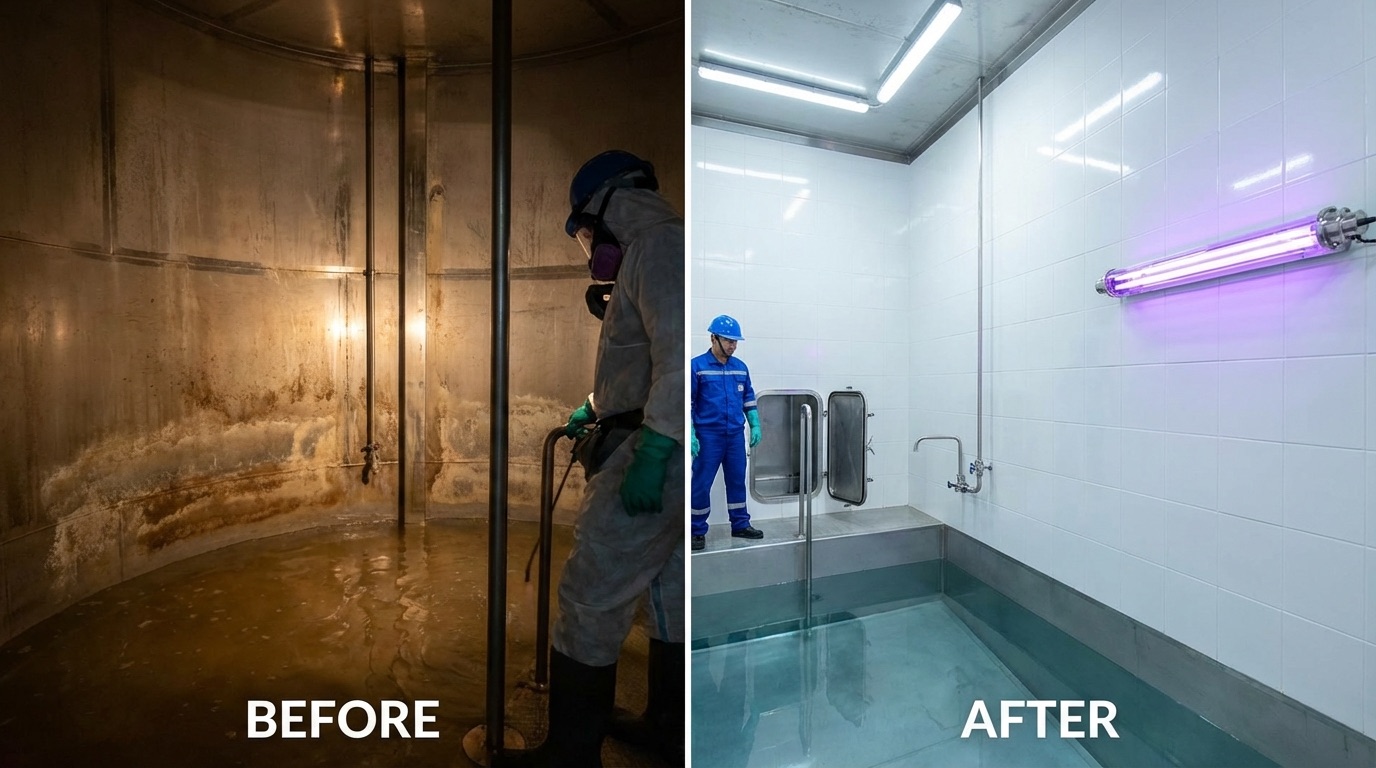
Before-and-after photo documentation
If a company can't provide the certificate, they aren't Dubai Municipality approved. Walk away.
Choosing a Water Tank Cleaning Company in Dubai
Not all cleaning companies are equal. How to evaluate them:
Non-Negotiable Requirements
Dubai Municipality Food Safety Department approval - Ask for the approval number. Verify it if you're unsure.
Trained, certified technicians - Staff should hold valid confined field entry certificates and food safety handling qualifications.
Proper insurance - The company should carry public liability insurance covering their work on your property.
Valid trade licence - An active Dubai DED or free zone trade licence for cleaning/maintenance services.
Good Signs
Transparent pricing with no hidden fees
Willingness to provide references from similar properties
Before-and-after photo documentation as standard practise
Water quality testing included or offered
Clear scheduling with a defined service window
Professional equipment (industrial pumps, high-pressure washers, PPE for confined field entry)
Red Flags
Prices significantly below market rate (AED 150 for a full villa tank cleaning isn't realistic)
Can't produce a Dubai Municipality approval certificate
No written quotation or service agreement
Technicians arriving without proper safety equipment
Reluctance to provide a cleaning certificate after the service
Pushing unnecessary add-on services aggressively
Maintaining Water Quality Between Professional Cleanings
Professional cleaning every six months is the foundation. Between visits, you can extend tank hygiene with these practices:
cheque tank lids and seals monthly - Ensure they're secure, intact, and pest-proof
Monitor water colour and taste - Any change warrants investigation
Keep the area around rooftop tanks clear - Remove debris, bird droppings, and vegetation
Ensure proper ventilation - Tanks need screened vents to prevent vacuum lock and pest entry
Run taps regularly - If a section of the property is unused, run water weekly to prevent stagnation
Monitor float valves - A stuck valve causes overflow or allows the tank to run dry, both of which stress the system
After extended absence (holidays, property vacancy), drain and flush the system before using water for drinking or cooking
These steps don't replace professional cleaning. They extend the benefit of it.
Water Tank Cleaning for Landlords and Property Managers
If you own rental property in Dubai, water tank maintenance is your legal responsibility - not the tenant's.
Your Obligations
Provide clean, safe water to tenants as part of a habitable premises
Maintain records of tank cleaning and water quality testing
Respond to tenant complaints about water quality promptly
Use only Dubai Municipality-approved cleaning companies
Practical Advice
Schedule cleaning before new tenants move in - It demonstrates professionalism and avoids disputes
Include tank cleaning in your annual maintenance budget - For a standard villa, AED 1,000-1,500 per year covers two cleanings with certificates
Keep certificates accessible - If a tenant raises a water quality complaint, your cleaning records are your first line of defence
Coordinate with your handyman services in Dubai provider to schedule tank maintenance alongside other routine property upkeep
For property management companies handling multiple units, annual maintenance contracts with a single approved provider simplify scheduling, reduce costs, and centralise compliance documentation.
The Connection Between Water Tanks and Other Home Maintenance
Water tank cleaning doesn't exist in isolation. It's part of a broader maintenance system:
Plumbing health - Corroded or blocked pipes can recontaminate clean tank water before it reaches your taps. Regular professional plumbing services catch these issues early.
General cleanliness - Properties that receive regular deep cleaning services in Dubai tend to have better overall maintenance awareness, including water tank hygiene.
HVAC and cooling - Cooling tower water systems in commercial buildings have similar contamination risks and require parallel maintenance schedules.
Think of water tank cleaning as one component of responsible property maintenance - not an isolated chore.
Frequently Asked Questions
How much does water tank cleaning cost in Dubai?
Residential water tank cleaning in Dubai typically costs between AED 300 and AED 1,800 depending on tank size and condition. A standard villa with one overhead and one underground tank averages AED 700-1,200 per cleaning session. Annual maintenance packages with two cleanings start from approximately AED 800-1,200 per year.
How often should I clean my water tank in Dubai?
Dubai Municipality mandates water tank cleaning at least once every six months. Properties with rooftop tanks exposed to direct sunlight, older concrete tanks, or commercial premises such as restaurants and hotels should consider cleaning every three to four months, especially during the summer.
Is water tank cleaning mandatory in Dubai?
Yes. Dubai Municipality regulations require all residential and commercial property owners to clean and disinfect water storage tanks regularly. The cleaning must be performed by a Dubai Municipality-approved company, and a valid Cleaning and Disinfection Certificate must be obtained and retained for each service.
Can I clean my water tank myself?
You can clean a small, accessible rooftop tank (under 500 litres) using basic tools and household bleach. But, underground tanks require confined field entry training and equipment - entering an underground tank without proper safety measures is genuinely dangerous. Also, DIY cleaning doesn't produce a Dubai Municipality-recognised certificate, so it doesn't satisfy compliance requirements for landlords or commercial properties.
What chemicals are used for water tank disinfection?
Professional companies use chlorine-based disinfectants (typically sodium hypochlorite) at concentrations around 50 mg/L for the contact period. Some companies use non-toxic biocides approved by Dubai Municipality. After disinfection, the tank is rinsed until residual chlorine drops to safe drinking water levels of 0.2-0.5 mg/L. All chemicals must be approved by Dubai Municipality's Food Safety Department.
How long does professional water tank cleaning take?
For a standard Dubai villa with two tanks (underground and overhead), expect the entire process to take 4-5 hours. This includes draining, manual scrubbing, high-pressure washing, disinfection (with a mandatory 1-2 hour chemical contact period), rinsing, refilling, and water quality testing. Larger commercial tanks or heavily contaminated tanks may require 6-8 hours.
What happens if I don't clean my water tank?
Neglected water tanks accumulate sediment, develop bacterial biofilm, and can harbour dangerous pathogens including Legionella, E. coli, and Pseudomonas. The health risks include gastrointestinal illness, respiratory infections (from Legionella), skin irritation, and allergic reactions. For landlords, failure to maintain water tanks can result in Dubai Municipality fines and legal liability if tenants fall ill.
How do I know if my water tank cleaning company is Dubai Municipality approved?
Ask the company for their Dubai Municipality Food Safety Department approval number. Legitimate companies display this certification prominently and provide a Cleaning and Disinfection Certificate after every service. You can verify approval through Dubai Municipality's official channels. If a company can't produce these credentials, don't hire them.
Does DEWA water need tank cleaning if it's already treated?
Yes. DEWA supplies high-quality treated water that meets international standards at the point of delivery. But, once water enters your property's storage tanks and internal plumbing, the quality becomes the property owner's responsibility. Tanks accumulate sediment, biofilm, and contaminants over time regardless of how clean the incoming supply is.
Should I clean both underground and overhead tanks?
Absolutely. Cleaning only the overhead tank while neglecting the underground tank means contaminated water is simply pumped up to the clean tank and recontaminated. Both tanks must be cleaned during each service visit. Many companies offer a combined price for both, which is more cost-effective than separate bookings.
Keep Your Water Safe
Water tank cleaning isn't glamorous work. But it's among the most important maintenance tasks for any Dubai property - directly affecting the health of everyone who lives or works there.
Dubai's climate makes it more critical here than in cooler regions. The combination of extreme heat, desalinated water supply, and mandatory storage creates conditions that demand regular, professional attention.
If it has been more than six months since your last tank cleaning - or if you've never had it done - that's your signal to act. The cost is modest. The process is straightforward. And the alternative - contaminated water flowing through your home - isn't worth the risk.
European Technical provides professional, Dubai Municipality-compliant water tank cleaning services across Dubai. Our certified technicians handle all tank types - GRP, concrete, polyethylene, and stainless steel - for villas, apartments, and commercial properties. Every service includes full disinfection, water quality verification, and a valid Cleaning and Disinfection Certificate. Contact European Technical to schedule your water tank cleaning or request a free inspection.