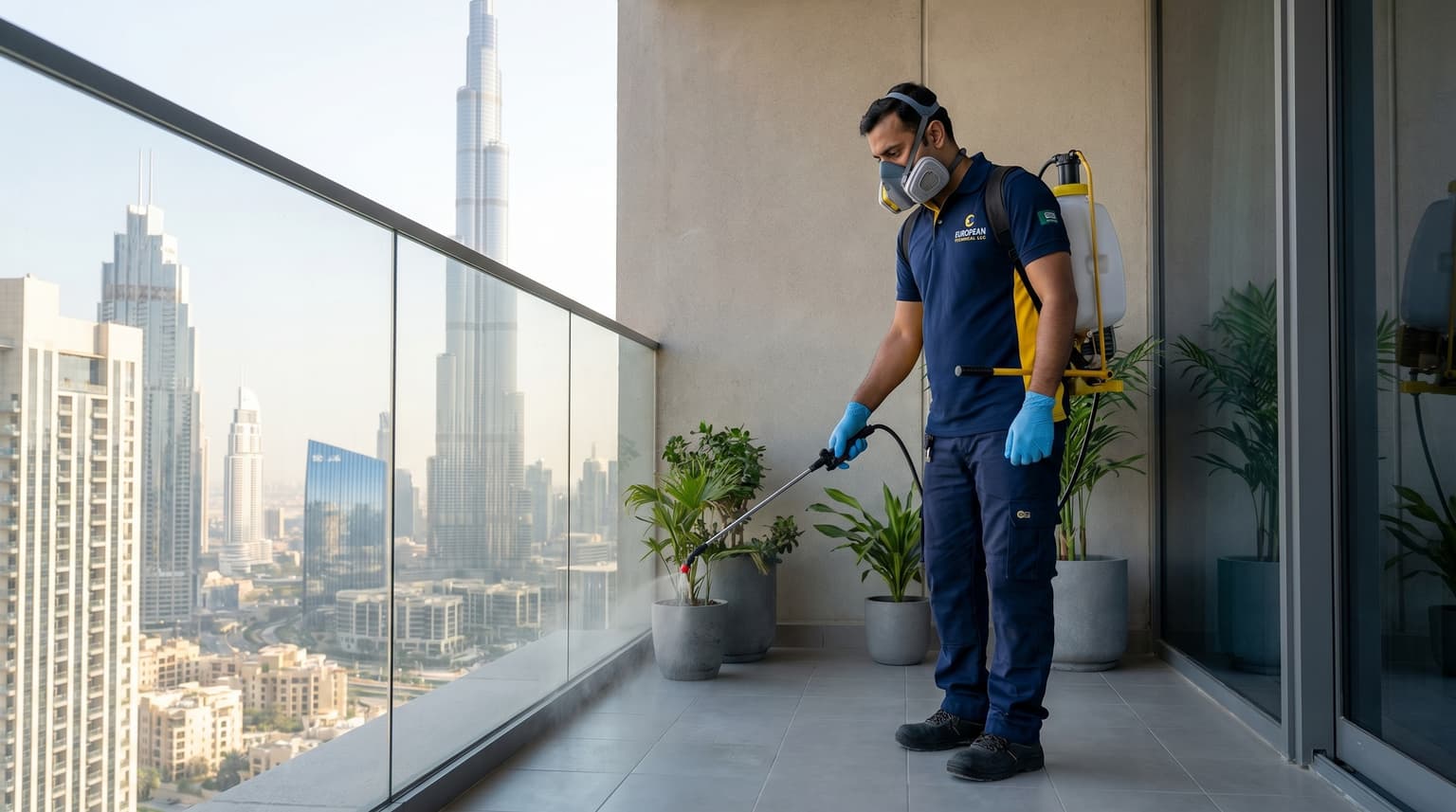
Best Pest Control in Dubai: How to Choose the Right Service for Your Home
By European Technical TeamDubai's climate is one of the best in the world for outdoor living, but that same heat and humidity makes it one of the most hospitable environments for pests. Whether you live in a villa in Jumeirah, an apartment in Business Bay, or a townhouse in JVC, at some point you will deal with an unwanted visitor. The question is not really whether to call a pest control company, but which one to trust.
This guide walks you through the most common pests in Dubai, what drives them indoors, how to choose a licensed service, and what a professional treatment actually involves. If you want to skip straight to booking, our pest control service covers all areas across Dubai.
The Most Common Pests in Dubai Homes and Buildings
Understanding what you are dealing with is the first step. Dubai pest controllers handle a fairly consistent set of species, though the type of property and neighbourhood can influence what turns up.
Cockroaches
German and American cockroaches are the two most frequently treated species in Dubai. German cockroaches tend to live inside, clustering around kitchens, under sinks, and behind appliances. American cockroaches are larger and often enter from drains or outdoor areas. Properties in Deira and Bur Dubai, with older infrastructure and high building density, tend to see higher cockroach pressure. Even modern towers in Downtown or Marina are not immune, particularly if there is a food outlet on the ground floor.
Ants
Pavement ants and red fire ants are common, particularly in ground-floor units and villas with garden access. Ant trails often appear in kitchens and bathrooms, following water sources. In villa communities like Jumeirah and Arabian Ranches, garden-adjacent rooms are typically the entry point.
Rodents
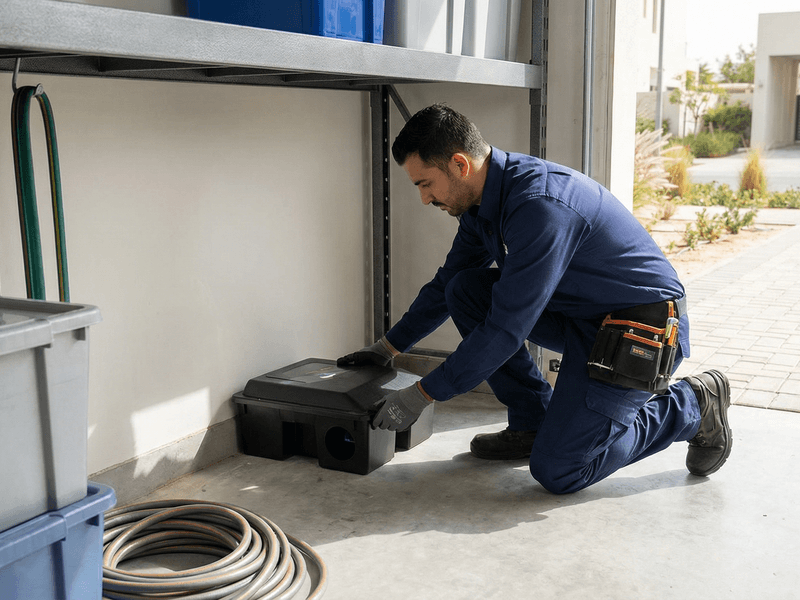
Rats and mice tend to become a problem during cooler months (October to March) when they move indoors seeking warmth. Older buildings in Bur Dubai and Deira are particularly vulnerable. However, rodents have been reported in modern developments too, often entering through poorly sealed utility conduits or ground-floor gaps. A rodent problem needs addressing quickly because they damage wiring, contaminate food, and carry disease.
Bed Bugs
Bed bugs have no preference for clean or dirty properties. They travel on luggage, second-hand furniture, and clothing. Once inside, they hide in mattress seams, bed frames, skirting boards, and even behind wall sockets. Hotels, furnished rentals in areas like JBR and Downtown, and serviced apartments see higher incidence due to guest turnover. Identifying bed bugs early matters because an infestation spreads within weeks.
Mosquitoes
Standing water is the main driver of mosquito problems in Dubai. Poorly maintained pools, water features, flower pot trays, and even AC drain pans create breeding grounds. During the summer months, mosquitoes are at their worst in areas with gardens and outdoor spaces. Silicon Oasis and International City, with a higher proportion of villa-style units and community gardens, often see more mosquito activity.
Seasonal Pest Patterns in Dubai
Dubai's pest activity does not follow a four-season cycle the way Europe does, but there are clear shifts through the year.
October to March (cooler period): Rodent activity increases as temperatures drop. Cockroaches become more active indoors as they follow warmth. This is typically when most residents notice problems. April to June (transitioning heat): Ant colonies expand and forage more aggressively. Flying termites can swarm during this window, particularly after rainfall or humidity spikes. July to September (peak summer): Mosquito activity peaks due to humidity and standing water from increased sweating and irrigation. Cockroach populations grow rapidly in warm, moist utility spaces. Most residents are spending more time indoors with the AC on, which means better chance of noticing an infestation that has been building quietly.Knowing the season can help you act before a minor sighting becomes a full infestation.
What Dubai Municipality Requires from Pest Control Companies
Dubai Municipality (DM) regulates pest control companies under its Public Health and Safety department. Any company offering pest control services in Dubai must hold a valid DM licence. This is not optional. Using an unlicensed operator risks ineffective treatment, misuse of chemicals, and potential fines for the property owner.
A licensed company must:
- Employ technicians certified by Dubai Municipality
- Use only approved chemical products registered with DM
- Follow prescribed safety protocols for preparation and post-treatment
- Provide a written treatment report and chemical data sheets on request
When you call any company, the first question to ask is for their DM licence number. Any reputable operator will provide this without hesitation. You can verify licences through the DM website or Dubai REST app.
European Technical holds all required Dubai Municipality licences and certifications for pest control across residential and commercial properties. All our technicians are trained and certified, and we use only approved products. View our pest control services for more detail.
Understanding Pest Control Costs in Dubai
Pricing varies depending on the type of pest, property size, severity of infestation, and treatment method. A general range based on current market rates:
| Treatment Type | Typical Cost (AED) |
|---|---|
| Standard cockroach treatment (apartment) | 150 , 300 |
| Cockroach treatment (villa) | 300 , 600 |
| Bed bug treatment (per room) | 200 , 500 |
| Rodent control (baiting and sealing) | 300 , 700 |
| Mosquito fogging (garden/outdoor) | 150 , 400 |
| General pest treatment (annual contract) | 800 , 2,500 |
Annual contracts typically offer better value for villa owners or landlords with multiple units. Contracts usually include quarterly or bi-monthly visits and priority call-outs if pests return between scheduled treatments.
Be cautious of prices that seem too low. Extremely cheap treatments often involve diluted chemicals, unlicensed technicians, or a quick spray with no preparation guidance, leaving the problem largely unsolved.
How to Choose the Best Pest Control Company in Dubai
With dozens of companies advertising online, narrowing it down takes some judgement. What to look for.
1. Valid Dubai Municipality licence. Already mentioned, but worth repeating. Ask for it upfront. 2. Transparent pricing with a written quote. A professional company will inspect (or ask the right questions) before quoting. Vague pricing over the phone without asking about property size or pest type is a warning sign. 3. Clear preparation instructions. Before any treatment, you should receive instructions about clearing cupboards, covering food, removing pets, and ventilating after treatment. If a company arrives without giving you any prep guidance, that is a red flag. 4. Guarantee on treatment. Reputable companies will offer a warranty period, typically 30 to 90 days, during which they will return free of charge if the problem persists. 5. Reviews from Dubai residents. Look for Google reviews that mention specific Dubai areas and specific pest types. Generic five-star reviews with no detail are less useful. 6. Communication in your language. Dubai's population is diverse. Good companies accommodate English, Arabic, Hindi, Tagalog, and other languages as standard.What to Expect During a Professional Pest Treatment
Many residents are unsure what happens during a visit. A typical process.
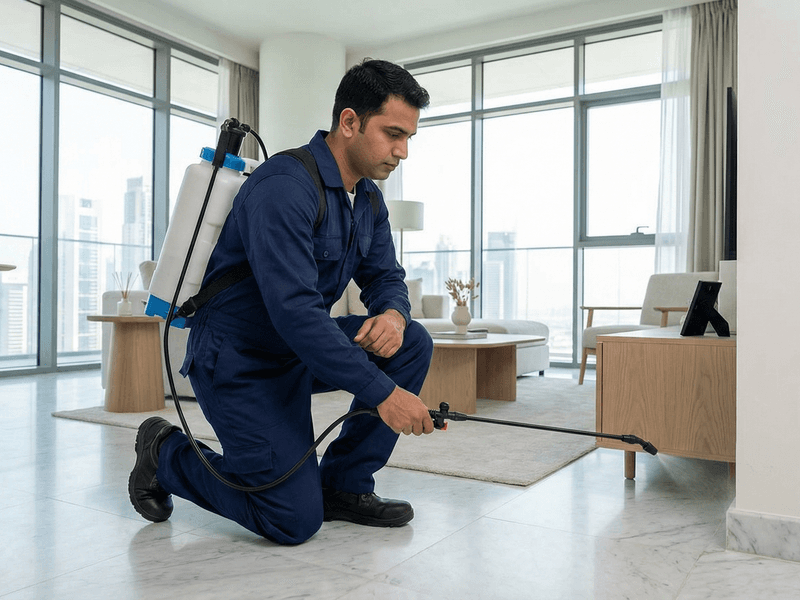
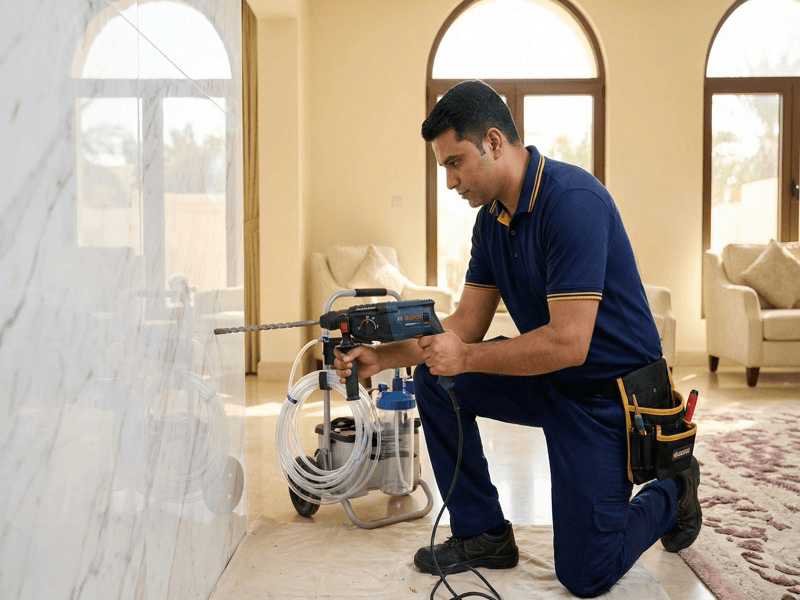
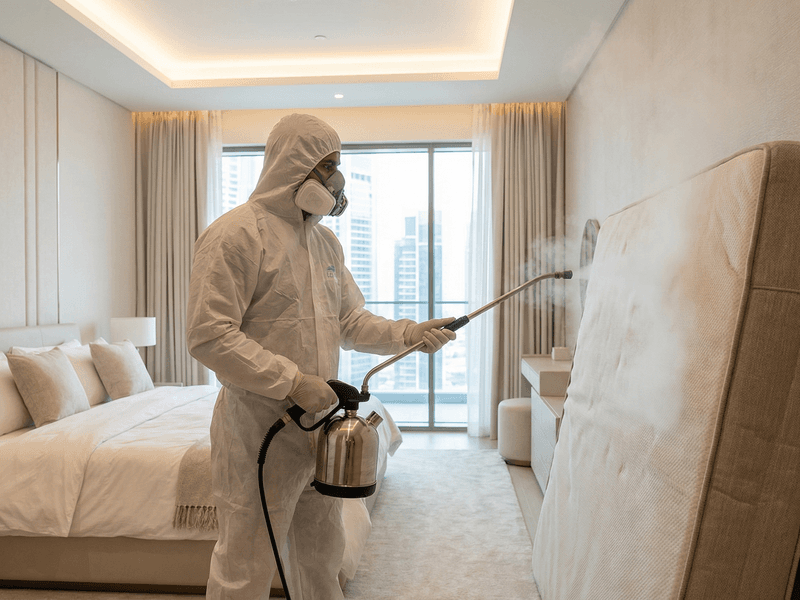
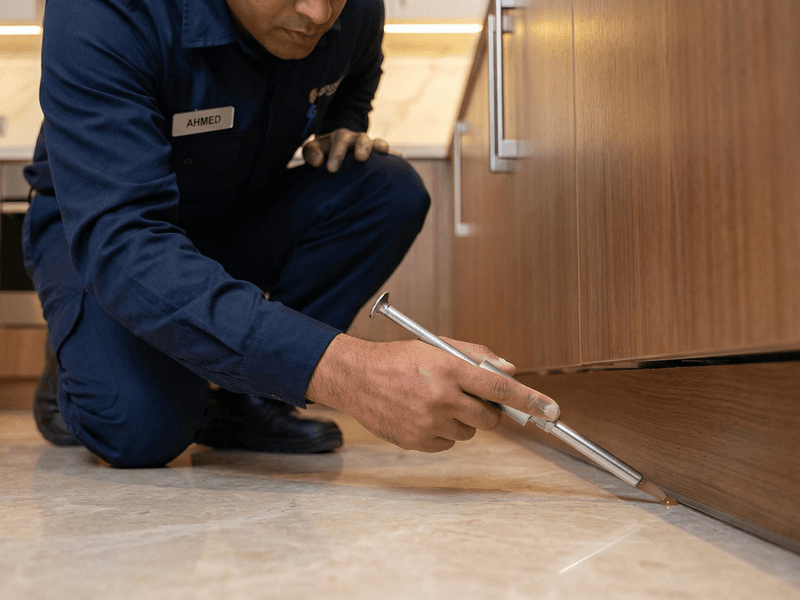
Survey: The technician inspects the property, checking known hotspots, identifying entry points, and assessing the severity of the problem. This takes 15 to 30 minutes for an apartment, longer for villas. Treatment application: Depending on the pest, this might involve gel baiting (cockroaches), residual chemical spraying along skirting boards and behind appliances, heat treatment (bed bugs), or bait station placement (rodents). Treatment time for a standard apartment is usually 45 to 90 minutes. Post-treatment instructions: You will be told how long to stay out of the property (typically one to three hours), how to ventilate, and what to watch for. Following these instructions is important for both safety and treatment effectiveness. Follow-up: Most companies schedule a follow-up inspection after two to four weeks to confirm the treatment has worked. For rodents and bed bugs, follow-up is particularly important.When to Call European Technical
Some situations warrant professional attention immediately rather than trying DIY sprays first.
- You have seen more than one cockroach, or found cockroach droppings in kitchen units
- There are bite marks on your skin and you suspect bed bugs
- You have found rodent droppings, chewed wiring, or gnawed food packaging
- There is a visible ant trail that does not resolve within a few days
- You have standing water near your property and mosquitoes are a nightly problem
- You are a landlord or property manager with a tenant complaint
Delaying tends to make infestations worse and ultimately more expensive to treat. Early intervention is always cheaper.
Our team covers all areas across Dubai, including Marina, JBR, Downtown, Business Bay, Jumeirah, JVC, DIFC, Deira, Bur Dubai, Silicon Oasis, International City, Al Barsha, and Mirdif. Call us on +971 58 544 1160 or message us on WhatsApp and we will arrange a visit at a time that suits you.
Book a pest control visit and get a confirmed appointment within 24 hours.Frequently Asked Questions
Is pest control safe for children and pets?Modern pest control products used by licensed companies are formulated for indoor use at concentrations safe for humans and pets once dry. You will be asked to keep children and pets out of treated areas for one to three hours. Your technician will confirm the specific re-entry time based on the products used during your treatment.
How often should I get pest control treatment in Dubai?For most Dubai apartments, a treatment once or twice a year is sufficient as a preventive measure. Villa owners and ground-floor units benefit from quarterly treatments, particularly for cockroaches and ants. If you have had an infestation in the past year, increase to quarterly until you have had two consecutive clear inspections.
Will one treatment be enough to get rid of cockroaches?For mild infestations, a single gel bait treatment is often sufficient. For heavier problems, a follow-up visit after two to four weeks is usually recommended, as eggs that were not exposed to the initial treatment can hatch after 10 to 14 days. Your technician will advise based on what they find.
Do I need to leave my apartment during treatment?For standard cockroach, ant, and general spray treatments, you typically need to vacate for one to three hours. Bed bug heat treatments require you to be out for longer, usually four to six hours. Your company should give you this information in advance so you can plan.
Does Dubai Municipality require landlords to provide pest control?Dubai tenancy law requires landlords to maintain properties in a habitable condition. Pest infestations that affect habitability may be the landlord's responsibility, depending on the cause. Structural gaps, drain issues, and building-wide infestations typically fall to the landlord or building management. Infestations caused by tenant hygiene are generally the tenant's responsibility. If you are unsure, document the issue and raise it with your landlord or RERA.
Ready to Sort the Problem?
Finding the best pest control in Dubai comes down to choosing a licensed, experienced company that communicates clearly and stands behind its work. European Technical ticks those boxes. We are Dubai Municipality licensed, our technicians are certified, and we guarantee results.
Call +971 58 544 1160, message us on WhatsApp, or book online. We serve all Dubai areas and can usually arrange a same-day or next-day visit.
Visit our pest control service page for full details on treatments, pricing, and coverage areas.