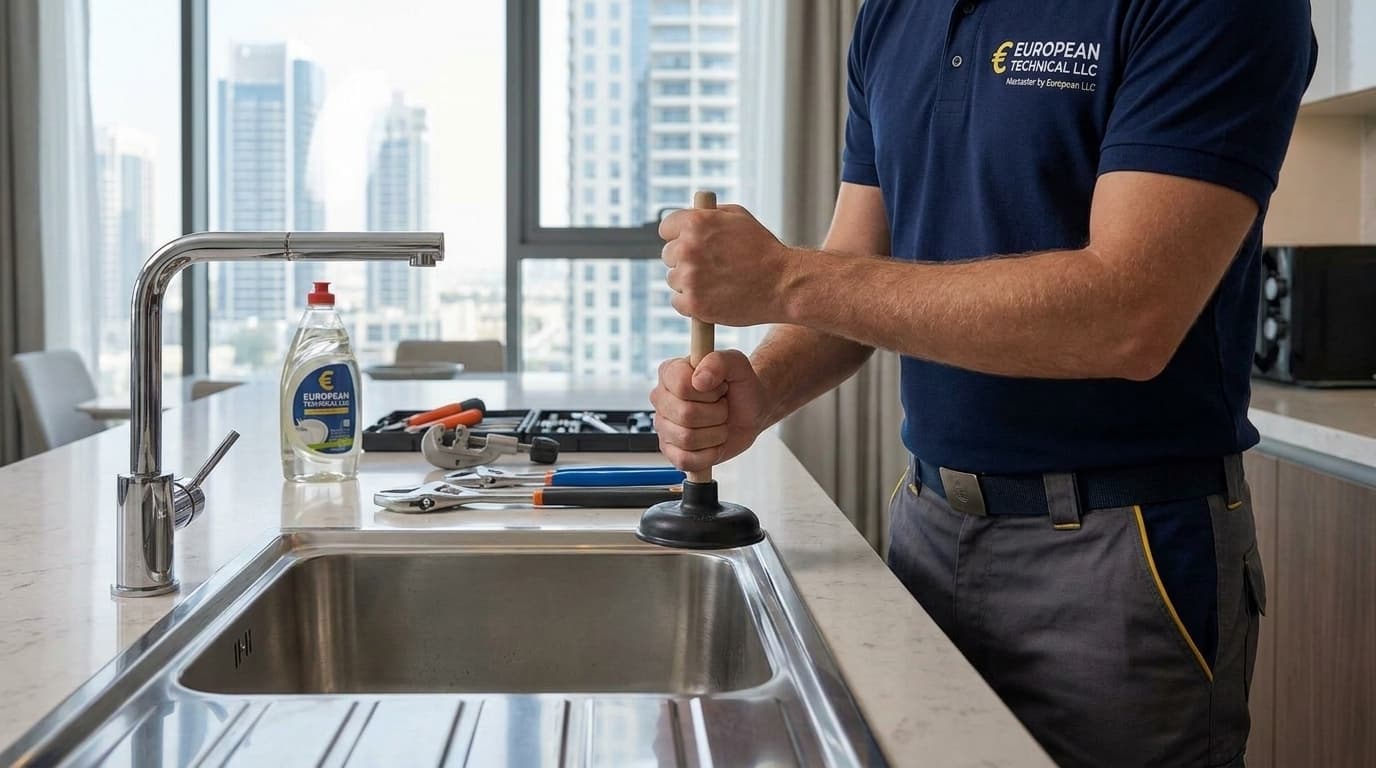
Why Drain Problems in Dubai Are Different
Anyone who has lived through a Dubai summer knows the strain the climate puts on a home. Air conditioning runs around the clock, humidity sits high for months on end, and dust finds its way into every corner of an apartment in JVC or a villa in Arabian Ranches. What many residents do not realise is that the same conditions affect the drainage system tucked away behind the walls and under the floors.
Kitchen drains in particular suffer here. Cooking oils that would stay liquid in cooler climates solidify quickly in air-conditioned pipework, clinging to the inside of the pipe and trapping food scraps. Bathroom drains collect hair and soap residue at a startling rate, especially in larger households. Add the fine sand and dust that settles into floor traps, and it is little wonder that blocked drains are one of the most common maintenance calls we receive at European Technical, whether the property is a studio in Dubai Marina or a four-bedroom townhouse in Sports City.
Understanding what causes these blockages, what a properly skilled plumber actually does to clear them, and what it ought to cost in the UAE is worth twenty minutes of any property owner's time. It can be the difference between a one-off fix and a recurring problem that damages cabinets, flooring and, eventually, your patience.
What Actually Causes a Blocked Drain
Most blockages come down to a handful of repeat offenders, and they are remarkably consistent across homes in Dubai:
Grease and cooking oil. Poured down the kitchen sink while warm, oil cools and hardens inside the pipe. Over weeks it narrows the passage until even water struggles to pass.
Food scraps. Rice, coffee grounds and small fragments of food swell or clump in the drain line. Combined with grease, they form a stubborn plug that no supermarket drain opener will shift for long.
Hair and soap build-up. Shower drains in particular collect hair that binds with soap scum into a dense mat just below the trap. This is the classic culprit when a bathroom floor starts to pool with water.
Sand and dust. In villas and ground-floor units, fine sediment washes into floor drains during cleaning and settles in the low points of the pipework.
Foreign objects and, occasionally, tree roots. In older villa communities such as Al Barsha or parts of Deira, mature landscaping can send roots into older clay or cast-iron drainage lines, causing blockages that recur no matter how many times the drain is cleared from inside the property.
A resident on a Dubai forum recently described a familiar cycle: a washroom drain blocking again and again, with drain-opening liquid working for perhaps a week before the problem returned. That pattern is not bad luck. It means the clearing method is only reaching part of the blockage, or the cause sits further along the line where a bottle of chemicals simply cannot reach.
Why Chemical Drain Openers Are a False Economy
Supermarket drain liquids are tempting because they are cheap and immediate. The problem is what they do not do. They generate heat and a brief chemical reaction that can punch a small channel through a soft blockage, but they rarely remove the grease coating or hair mass responsible. A week later, the channel closes up and you are pouring chemicals into the same pipe.
There is a second issue that matters to property owners in Dubai. Repeated use of caustic chemicals is harsh on older pipe joints and gaskets, particularly in buildings constructed in the early 2000s across areas like Marina and TECOM where pipework may already be approaching the end of its service life. If you are a landlord or a tenant who does not want to explain damaged pipework to a landlord, this matters.
A professional plumber clears the blockage mechanically and, where appropriate, with high-pressure water jetting. Physical removal, not chemical dissolution, is what produces a drain that stays clear.
What a Skilled Plumber Actually Does
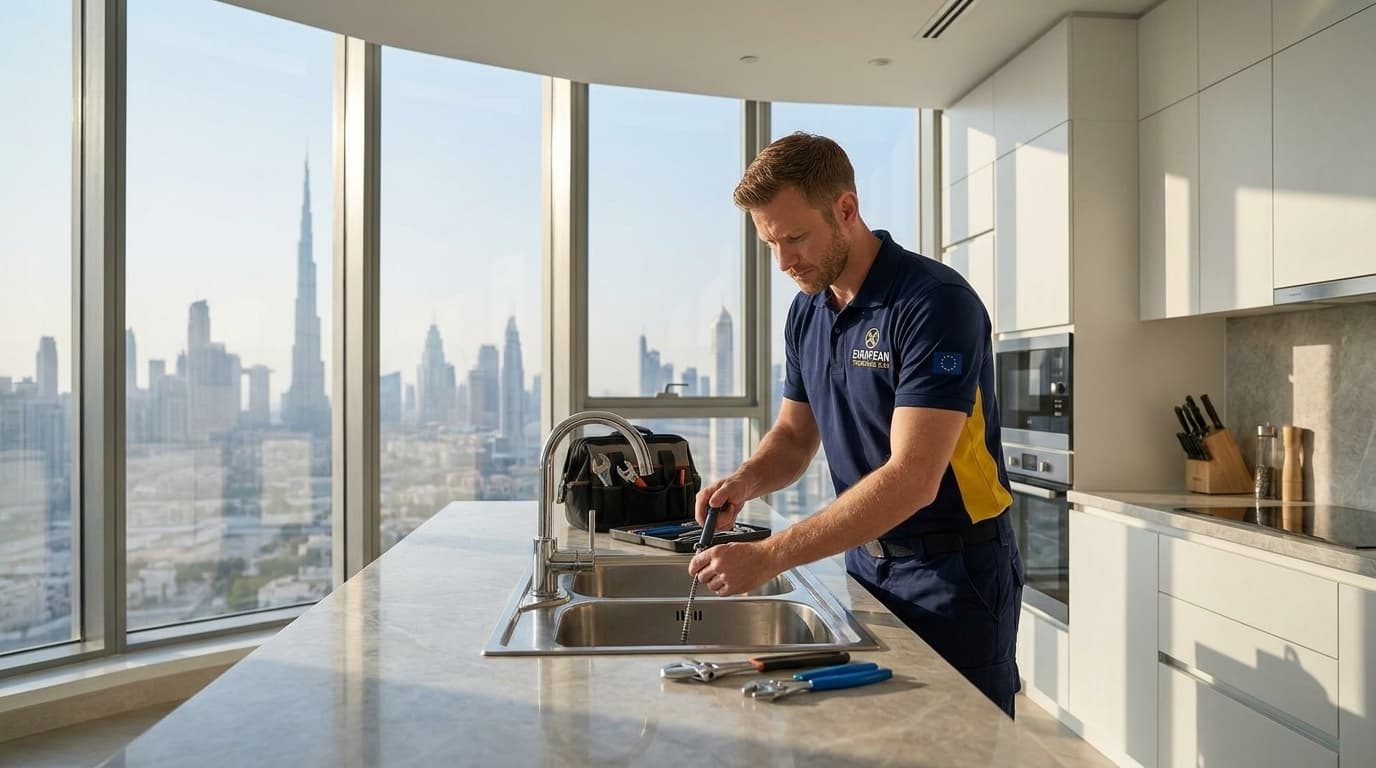
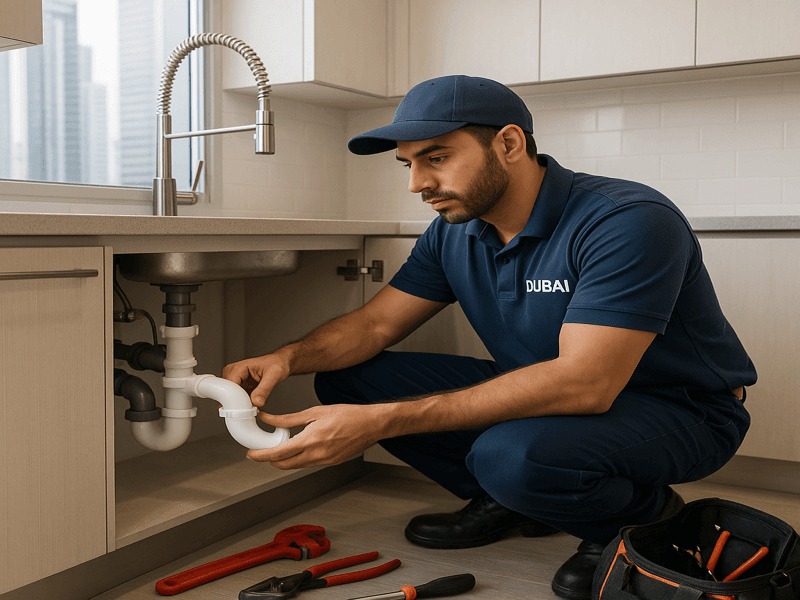
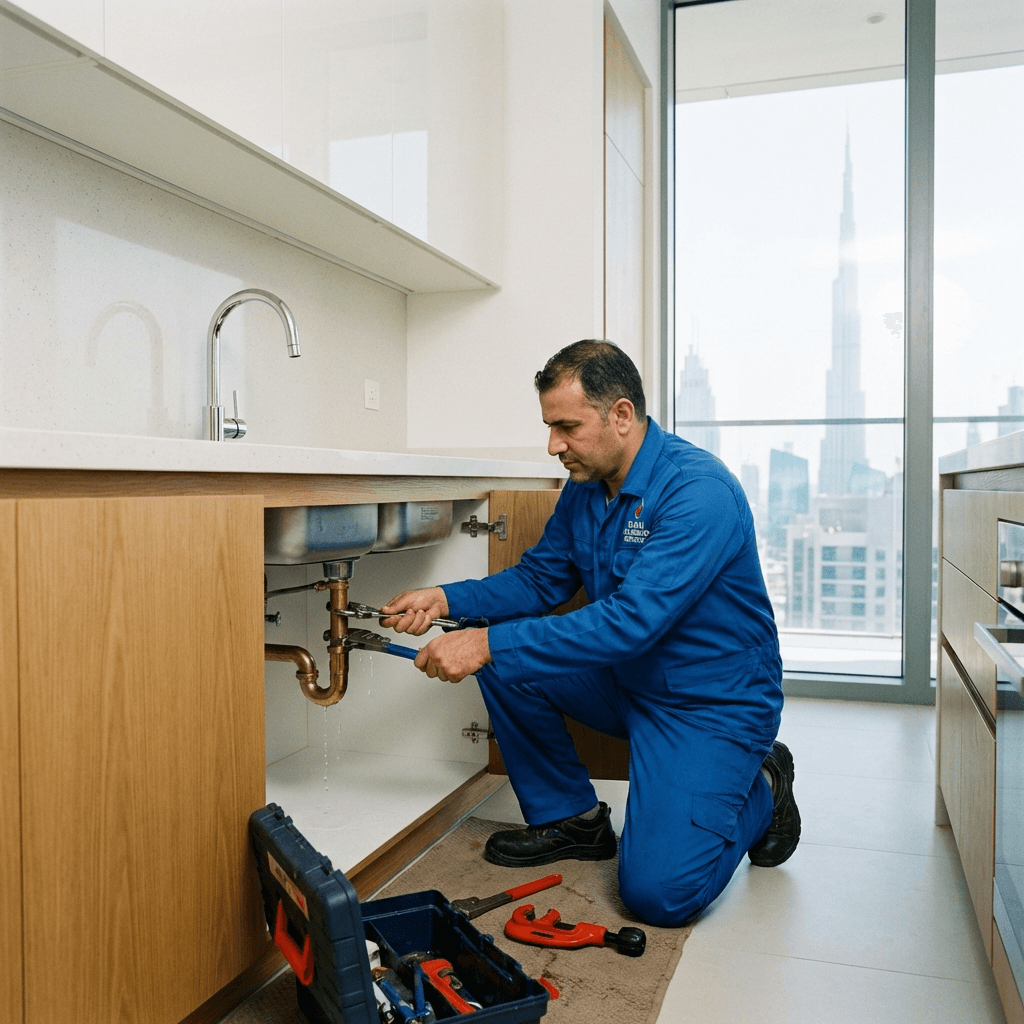
There is a difference between someone who arrives with a plunger and someone who arrives with the right equipment and the maintenance knowledge to diagnose the cause. When European Technical attends a blocked drain call in Dubai, the process normally runs along these lines.
Inspection and diagnosis
The engineer asks where the water is backing up, whether more than one fixture is affected, and whether there are gurgling sounds from other drains. Multiple blocked fixtures point to a blockage in the main line rather than a single trap. This five-minute conversation saves an hour of trial and error.
Mechanical clearing with a drain snake or auger
For hair clogs and blockages close to the fixture, a drain snake breaks up and pulls out the offending mass. Done properly, the debris is extracted rather than pushed further down the line, which is a common mistake with amateur attempts.
High-pressure water jetting
For grease-lined kitchen drains and recurring blockages, drain line jetting is the gold standard. A nozzle feeds into the pipe and fires jets of water forwards and backwards along the pipe wall, stripping grease and sediment back to bare pipe. It is the method we rely on for both residential and commercial drain cleaning in Dubai, where restaurant and kitchen lines in Business Bay and Al Quoz need far more aggressive cleaning than a domestic sink.
Flow testing and reporting
After clearing, the line should be tested by running water at volume and checking every connected fixture. A reputable company confirms the drain is flowing freely before leaving, and a post-job service report should be available on request. This is standard practice for us because landlords and property managers often need documentation for tenant records and insurance purposes.
What Does a Plumber Cost in Dubai?
This is where the topic of salary and skill comes in. Residents often search for what a plumber with maintenance skills earns in the United Arab Emirates, and the honest answer is that it varies widely with licence, experience and specialisation. A general handyman who can clear a simple trap sits at the lower end of the scale. A licensed plumber who can operate jetting equipment, diagnose a main-line fault and carry out drain repair commands significantly more, and companies that employ such technicians price accordingly.
For residents, the practical translation is this. Call-out and diagnosis for a blocked drain in Dubai generally falls in the region of AED 150 to AED 300, with straightforward blockage clearance in apartments often landing between AED 200 and AED 500 depending on severity, access and time of day. Emergency and after-hours attendance carries a premium. Jetting a stubborn kitchen line or a main drainage line in a villa can run higher because of the equipment and time involved.
The false economy works in both directions. The cheapest quote is frequently the one that returns in a fortnight, while a properly executed jetting job can keep a kitchen drain clear for years when paired with sensible habits. Tenants in Dubai should also remember that landlords typically bear responsibility for major plumbing repairs under standard tenancy arrangements, so persistent or repeated blockages should be reported in writing rather than repeatedly self-funded.
Preventing the Next Blockage
Clearing a drain is half the job. Keeping it clear is the other half, and it costs almost nothing.
Use strainers in every sink, shower and floor drain to catch hair, food scraps and debris before they enter the pipe. Never pour cooking oil or grease down the kitchen sink; let it cool and dispose of it in the bin. Scrape plates into the waste bin rather than rinsing food into the drain. Run hot water through the kitchen sink weekly to help shift light residue before it builds up. In villas, hose floor drains and external gullies clear of sand after any landscaping work or dust storms.
For landlords and owners of multiple properties, prevention is best handled systematically. An annual maintenance contract that includes periodic drainage checks catches build-up before it becomes a blockage, and bundles plumbing, electrical and AC attention into scheduled visits rather than emergency calls. It is the approach most property managers in Dubai now insist on for their portfolios, and it works equally well for a single apartment in Downtown.
When to Stop DIY and Call a Professional
Some situations justify immediate professional attendance rather than another attempt with a plunger:
- Water backing up in more than one fixture at the same time, which suggests a main-line blockage
- Sewage smell from floor drains, indicating a venting or trap problem
- Repeated blockages in the same drain within weeks of clearing
- Standing water around an external gully or in the garden of a villa
- Flooding from a blocked kitchen drain, which can damage cabinetry and flooring within hours
A forum post from a Dubai resident this week described exactly this: a blocked kitchen drain with water flooding out, resolved only when a maintenance professional attended. Flooding situations risk water damage to units below in apartment buildings, and DEWA and building management both take a dim view of delayed reporting in shared towers. Attend to it quickly with a licensed operator.
European Technical provides licensed plumbing and drain cleaning across Dubai, from apartments in Marina and JVC to villas in Arabian Ranches and Silicon Oasis. If a recurring drain problem points to worn fittings, damaged traps or leaky fixtures beyond the blockage itself, our handyman team handles the repair work in a single visit, and you can also arrange a broader home maintenance check so related issues are caught together. Same-day attendance is available across the emirate.
FAQ
How much does it cost to unblock a drain in Dubai?
Call-out and diagnosis for a blocked drain generally falls between AED 150 and AED 300, with straightforward clearance in apartments typically costing AED 200 to AED 500 depending on severity and access. Emergency or after-hours attendance and main-line jetting in villas cost more. Always ask for an upfront quote after inspection before work begins, which is standard practice for reputable Dubai providers.
Why does my drain keep blocking again and again?
Recurring blockages usually mean the clearing method is only opening a partial channel through the blockage, or the cause sits further along the pipe. Grease lining a kitchen line, hair mats below a shower trap or, in older villa areas, roots entering the drainage line will keep causing problems until the pipe is properly cleaned with a drain snake or high-pressure jetting.
Are chemical drain openers safe to use?
Occasional use on a soft blockage can provide temporary relief, but chemicals rarely remove the underlying build-up and repeated use is harsh on pipe joints and gaskets, particularly in older Dubai buildings. If a drain opener works for only a week before the blockage returns, the drain needs mechanical clearing by a plumber, not another bottle.
What is drain line jetting and when is it needed?
Drain line jetting feeds a specialised nozzle into the pipe and fires high-pressure water along the pipe wall, stripping grease, soap residue and sediment back to a clean surface. It is the preferred method for grease-lined kitchen drains, recurring blockages and commercial kitchen lines, and it delivers far longer-lasting results than chemical cleaners.
Who pays for plumbing repairs, the tenant or the landlord?
In Dubai, landlords typically bear responsibility for major plumbing repairs and structural drainage faults under standard tenancy arrangements, while tenants are generally expected to handle minor day-to-day issues. If a blockage keeps recurring or affects the main drainage line, report it to the landlord or agent in writing so it is addressed by a licensed plumber rather than repeatedly self-funded.
How can I prevent blocked drains in my Dubai home?
Fit strainers in sinks, showers and floor drains, never pour grease or oil down the kitchen sink, scrape food scraps into the bin, and run hot water through the kitchen sink weekly. In villas, keep floor drains and external gullies clear of sand after dust storms or landscaping. Periodic professional drainage checks under an annual maintenance contract catch build-up before it becomes a blockage.