Why Bathroom Silicone Goes Mouldy In Dubai Homes
If you have lived in Dubai for more than one summer, you already know the pattern. The bathroom starts to smell slightly musty. A faint grey line appears along the edge of the bath or shower tray. Within a few weeks, the once-pristine white silicone around your tiles has turned black in patches, and no amount of scrubbing seems to shift it.
This is one of the most common maintenance complaints we receive from residents in Dubai Marina, JVC, Business Bay and the older villa communities alike. The reason is simple: Dubai bathrooms are naturally damp spaces, and our climate makes them damper than most. High humidity, particularly during the summer months when air conditioning meets warm, moisture-laden air, creates the ideal environment for mould spores to multiply.
Silicone sealant is not immune to this. In fact, it is often the first place mould appears, because sealant joints stay cooler than the surfaces around them. That temperature difference encourages condensation, and condensation plus organic residue from soap and body oils gives mould everything it needs to establish itself. A bathroom in an Arabian Ranches villa with poor extraction ventilation will show mould on silicone far faster than a well-ventilated apartment in Downtown Dubai, but no property is entirely immune in this climate.
The problem is not simply cosmetic. Mouldy sealant is often the visible sign of a seal that is failing. Once mould has penetrated the silicone, the sealant is no longer doing its job of keeping water out of the gaps between your bath, shower tray, basin and the surrounding walls. That is when small leaks begin, and small leaks in Dubai properties become expensive problems remarkably quickly, especially in apartment buildings where water can travel into the unit below.
Why Cleaning Mouldy Silicone Rarely Works
The instinctive response is to reach for bleach and a scrubbing brush. We understand that instinct, and in some cases a superficial clean can improve the appearance of the sealant for a short while. Homeowners have had some success with methods such as applying bleach-soaked tissue paper to the affected bead, leaving it in place for several hours, and then washing the area down thoroughly.
However, in our experience as a maintenance company working across Dubai, cleaning mouldy silicone is usually a temporary fix at best. Here is why: mould does not just sit on the surface of the sealant. It penetrates deep into the silicone itself.
New silicone sealant contains mould preventatives, which are chemicals mixed into the product specifically to resist fungal growth. These are effective, but they degrade over time. As the sealant ages, it develops microscopic pores. These pores trap soap scum, moisture and organic matter, which is precisely the food source mould needs. Once the spores have established themselves inside the body of the sealant, no amount of surface cleaning will remove them. You may bleach the visible black staining away for a few weeks, but the mould organism remains within the joint and will reappear, usually worse than before.
This is why we tell our customers in Dubai that replacement, not cleaning, is the correct solution once mould has taken hold. If the mould is superficial and the sealant is relatively new, cleaning may buy you time. If the silicone is more than a couple of years old and the staining keeps returning, the sealant has reached the end of its service life and should be professionally replaced.
What Mouldy Silicone Replacement Costs In Dubai In 2026
Now to the question most Dubai residents actually care about: what does it cost to put this right?
In 2026, the cost of replacing mouldy silicone caulking in Dubai generally ranges from AED 150 to AED 700 or more. That is a wide band, so let us break down what drives the price.
At the lower end of the range, around AED 150 to AED 250, you are typically looking at a straightforward re-seal of a single wet area, such as a shower cubicle or around a bath, where the old sealant removes cleanly and the joint is in good condition. This is the most common job we carry out in apartments in areas like JVC, Dubai Marina and Business Bay, where bathroom layouts are compact and the areas requiring sealant are limited.
In the middle of the range, roughly AED 300 to AED 500, the scope expands. This might include re-sealing multiple areas in one bathroom, such as the bath, basin, shower screen and tiled joints around the wet wall, or replacing sealant that has been badly over-painted or previously patched with incompatible products, which takes longer to remove. Kitchens also fall into this bracket: the silicone around a kitchen sink and worktop splashback in a Downtown or Arabian Ranches home is exposed to a different kind of grime, cooking grease and food residue, but it degrades in a similar way and eventually needs the same treatment.
At the top of the range, AED 700 and above, you are paying for extensive work. This could be several bathrooms in a villa, a large master bathroom with a jacuzzi or separate shower enclosure, or situations where the failed sealant has allowed water ingress and surrounding grout or plaster also needs attention. Villa owners in communities such as Arabian Ranches, The Springs and Jumeirah often fall into this category simply because they have more bathrooms and larger wet areas than apartment residents.
Three main factors determine where your job sits in this range: the number of areas being sealed, the length and accessibility of the joints, and whether any underlying water damage needs remediation. A quick telephone description and a few photographs are usually enough for a reputable maintenance company to give you a reliable quotation, and honest firms in Dubai will always confirm the price on site before starting work.
As a general rule, the cost of replacing bathroom or kitchen sealant is a very small fraction of the cost of the leak damage it prevents. Repairing water-damaged cabinetry, re-tiling a wet wall or dealing with a neighbour's ceiling below your apartment in a Marina tower will cost many multiples of AED 700. Sealant replacement is, in our view, one of the highest-value maintenance jobs in any Dubai home.
Choosing The Right Mould-Resistant Silicone In Dubai
Not all sealants are created equal, and this matters enormously in the UAE climate. When it comes to replacing mouldy bathroom sealant in Dubai, selecting a high-quality, mould-resistant product is essential. The local market offers a range of options, and premium sanitary silicones provide the best defence against our humidity.
What should you look for?
First, insist on 100% silicone sealant for any wet-area bead that will not be painted. Silicone remains the correct choice for bathtubs, showers, wet rooms, sinks and basins because it is fully waterproof, flexible and durable. Some products, such as Unibond Anti Mould Shower and Bathroom Sealant, are specifically formulated for shower and bathroom use, offering strong adhesion, a long-lasting seal and an anti-mould formulation. These are the categories of product we recommend and use on our own jobs in Dubai.
Second, understand what the anti-mould claims actually mean. As we have explained, the mould preventatives in silicone degrade over time. A premium sanitary silicone will resist mould for significantly longer than a cheap general-purpose product, but no sealant lasts forever in a Dubai bathroom. Expect several years of good performance from a quality product, and expect a budget product to discolour within a year or two.
Third, pay attention to the ventilation in your bathroom. Even the best silicone cannot compensate for a bathroom that never dries out. If your extractor fan is weak or unused, the sealant will fail sooner regardless of quality. Combined with a quality sealant, good airflow is your cheapest defence against mould.
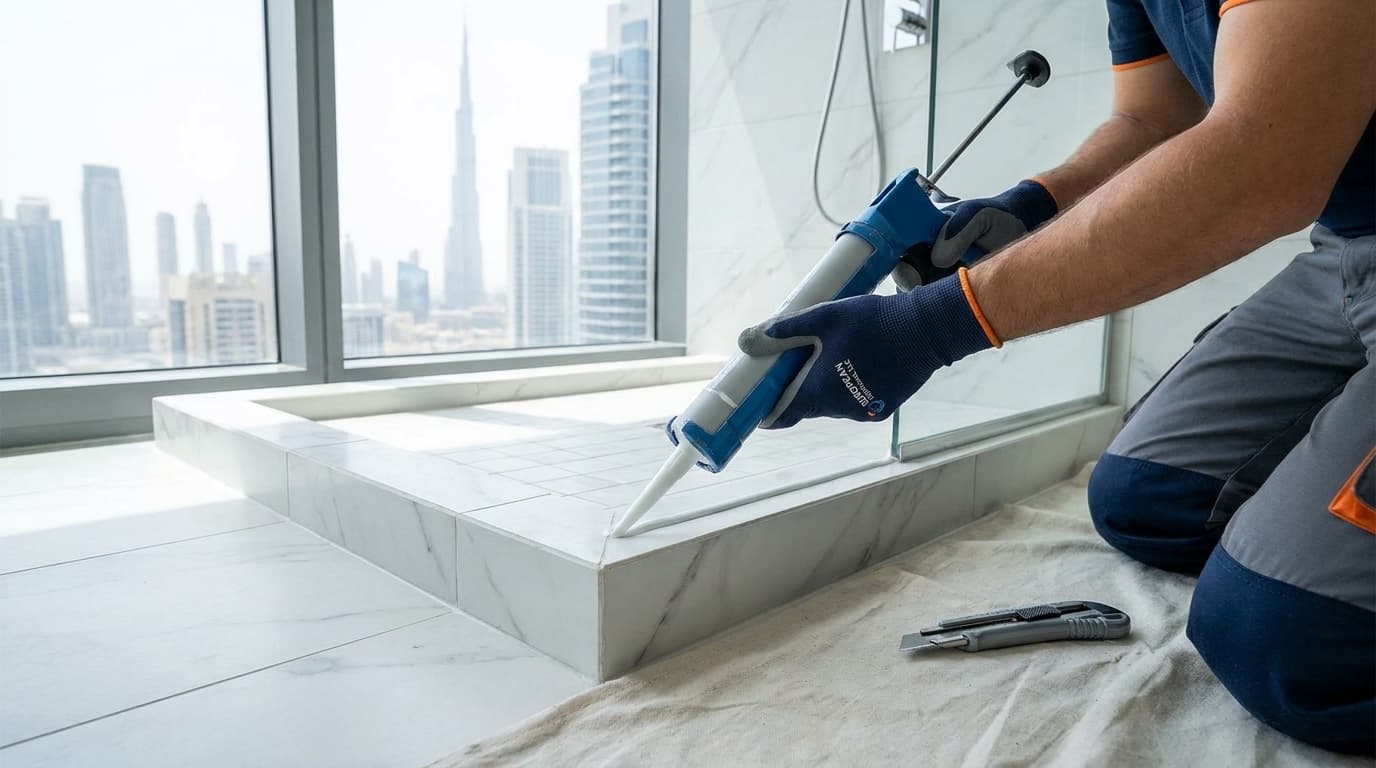
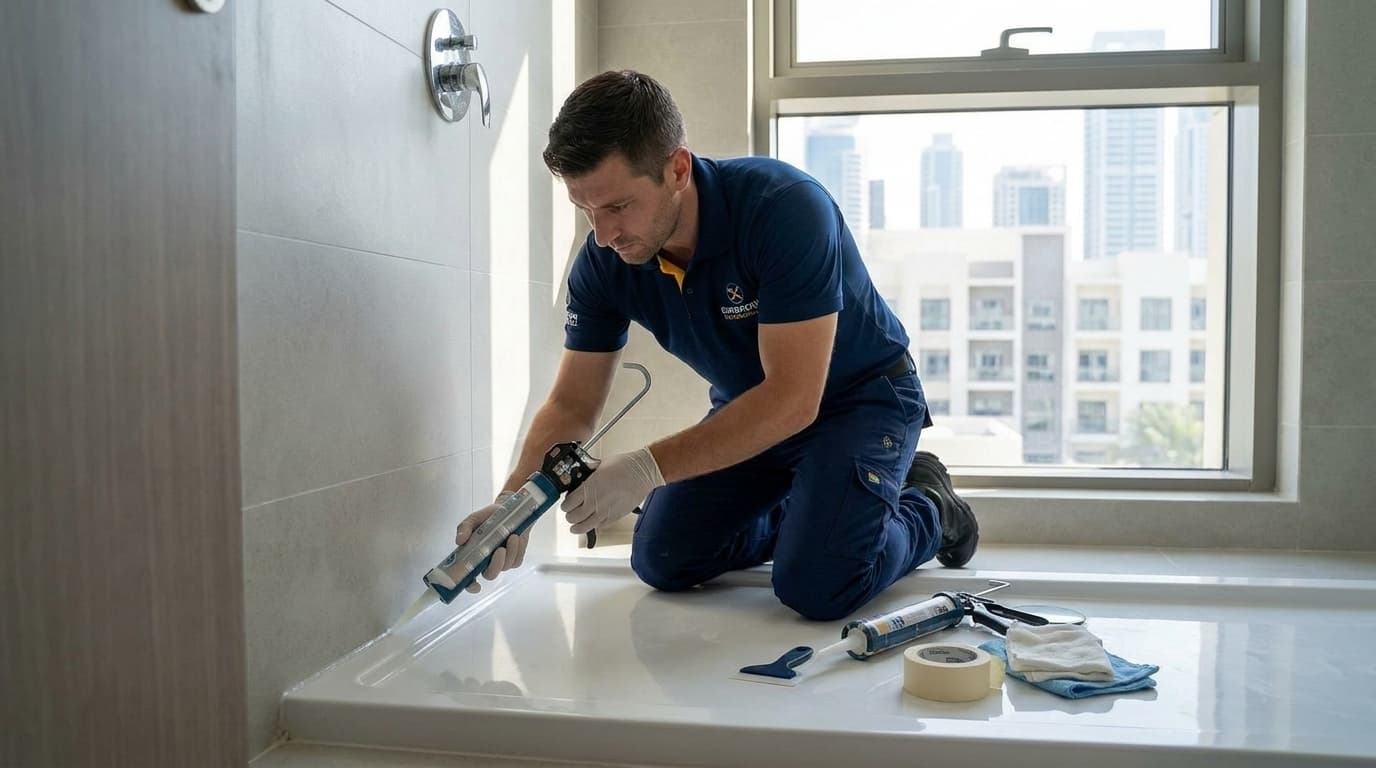
This is also why the workmanship matters as much as the product. Sealant must be applied to a completely clean, dry joint, with all traces of the old silicone removed and the surface properly prepared. Any residue of old sealant left behind will prevent the new bead from bonding, and the joint will fail at the first sign of water. Professional application, with the correct tools, masking and curing time, is what separates a seal that lasts five years from one that fails in six months.
Keeping Your New Sealant Mould-Free For Longer
Once your new silicone is in place, the good news is that you do not need a heavy cleaning routine to protect it. What you do need to do is shorten the wet time and remove the film that feeds staining.
Practical steps for Dubai bathrooms and kitchens:
- Squeegee or towel down the shower enclosure and bath after use, particularly during humid months when water evaporates slowly.
- Run the extractor fan during and after showers for at least fifteen minutes, and leave the door ajar afterwards to allow moisture to escape.
- Wash the sealant bead weekly with a mild detergent to remove soap scum before it builds up. Soap film is the food source for mould, so removing it removes the problem.
- Avoid leaving wet towels or bath mats resting against sealed joints.
- In the kitchen, wipe down the sink sealant after washing up, and clean grease splashes from the splashback promptly, as grease traps moisture against the bead.
These habits cost nothing and can extend the life of your sealant considerably. In our experience, bathrooms where residents follow this basic routine stay mould-free for years longer than bathrooms that stay damp.
For landlords and property owners, this is worth emphasising. Tenants notice mouldy bathrooms, and mould complaints are among the most common maintenance requests we handle. Many owners in Dubai include sealant checks in their annual maintenance contract, so that silicone, grout and plumbing are inspected regularly rather than waiting for visible mould or a leak. A preventive re-seal every few years is far cheaper than an emergency call-out and a tenant relations problem.
How European Technical Can Help
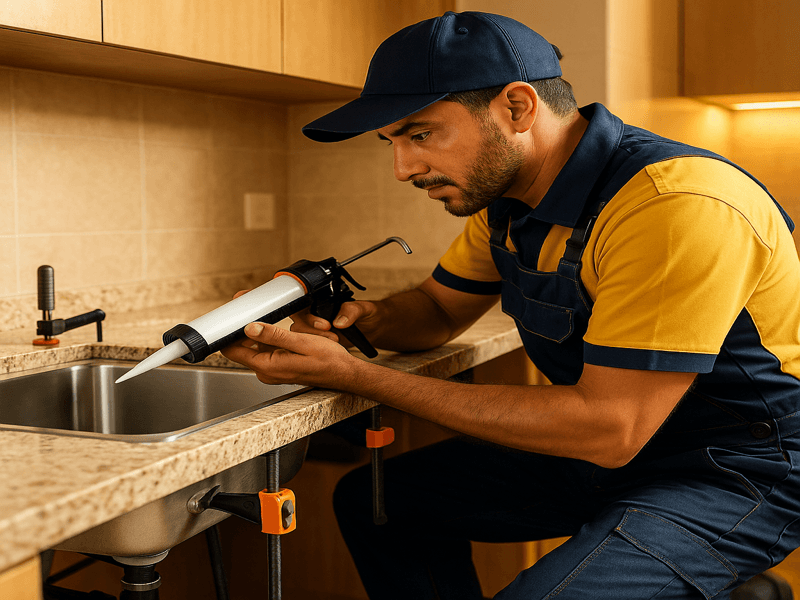
European Technical is a licensed Dubai maintenance company, and mouldy silicone replacement is one of our most requested jobs. Our plumbing team handles leaking showers and baths that often accompany failed sealant, and our handyman service covers re-sealing, grout repair and the small finishing jobs that make a bathroom look properly renewed. If the silicone problem is part of a bigger refresh, such as repainting a bathroom with mould-resistant paint, our painting and refurbishment team can complete the whole job in one visit.
We work across Dubai, from studio apartments in JVC and Business Bay to large villas in Arabian Ranches and Jumeirah. Our technicians carry premium sanitary-grade, mould-resistant silicones suited to the UAE climate, and we remove and replace sealant properly, including full joint preparation, so the new bead bonds correctly and lasts.
FAQ
Why does mould grow on silicone sealant in Dubai bathrooms?
Mould grows because Dubai bathrooms are naturally damp spaces with high humidity. Silicone sealants contain mould preventatives, but these chemicals degrade over time. As the sealant breaks down, it develops microscopic pores that trap soap scum and moisture, giving mould spores the perfect environment to multiply. The warm, humid UAE climate accelerates this process compared with cooler, drier countries.
Can I just clean the mouldy silicone instead of replacing it?
Cleaning may improve the appearance briefly, but it is rarely a lasting solution. Mould penetrates deep into the body of the sealant rather than sitting only on the surface, so bleach or household cleaners cannot reach it. The staining will typically return within weeks. If the silicone is more than a couple of years old or the mould keeps coming back, replacement is the correct fix.
How much does it cost to replace mouldy silicone caulking in Dubai in 2026?
In 2026, replacing mouldy silicone caulking in Dubai generally costs between AED 150 and AED 700 or more. A single shower or bath re-seal typically sits at the lower end, while multiple bathrooms, villa-sized wet areas or jobs requiring additional grout or water-damage repairs push the price higher. The number of areas, joint length and any underlying damage are the main price factors.
How often should bathroom silicone be replaced in the UAE?
There is no fixed rule, but in Dubai's humidity expect quality sanitary silicone to perform well for several years before showing mould or wear. Budget sealants may discolour within a year or two. Inspecting the bead every six months, and re-sealing as soon as mould takes hold or the bead cracks, keeps the underlying structure protected and avoids costlier water damage.
What type of silicone should I use in a Dubai bathroom?
Use a 100% silicone, mould-resistant sanitary sealant for wet areas such as showers, baths, sinks and wet rooms, since these beads are not painted. Premium sanitary silicones offer the best defence against the UAE climate, with stronger adhesion, long-lasting waterproofing and anti-mould formulation. If a bead needs to be painted, use a paintable hybrid sealant instead.
Does a maintenance contract cover silicone replacement?
Many property owners in Dubai include sealant and grout inspection in their annual maintenance arrangements so that deteriorating silicone is replaced before mould or leaks develop. This is usually far cheaper than reactive repairs. European Technical offers annual maintenance contracts covering plumbing, handyman work and preventive checks across Dubai homes and rental properties.