Why AC Problems in Dubai Never Fix Themselves
There is a particular kind of quiet panic that hits Dubai residents in July. The compressor outside starts making a noise it has never made before, the living room takes two hours longer to cool than it used to, and you find yourself standing under the vent with your hand raised, wondering whether it has always blown this weakly. It has not. Something is wrong.
In most climates, a struggling air conditioner is an inconvenience. In Dubai, it is an emergency waiting six months to happen. Our units run for the better part of the year, often around the clock from May to October, pushing against 45°C heat and coastal humidity that creeps into Marina apartments and JVC townhouses alike. That workload is brutal, and it wears components down in predictable ways.
The trouble is that most people only call a technician once the system has already failed, usually on the hottest week of the year, when every AC repair company in the city has a waiting list. The smarter move is to read the warning signs early. Below are the five signals we see most often when we are called out to homes across Dubai, from Downtown high-rises to Arabian Ranches villas, and what each one is likely telling you.
Sign 1: Weak Airflow From the Vents
Put your hand near a vent on a hot afternoon. You should feel a steady, forceful stream of cold air. If the air is coming out at a lazy trickle, or if some rooms feel fine while others barely cool at all, your system is telling you something.
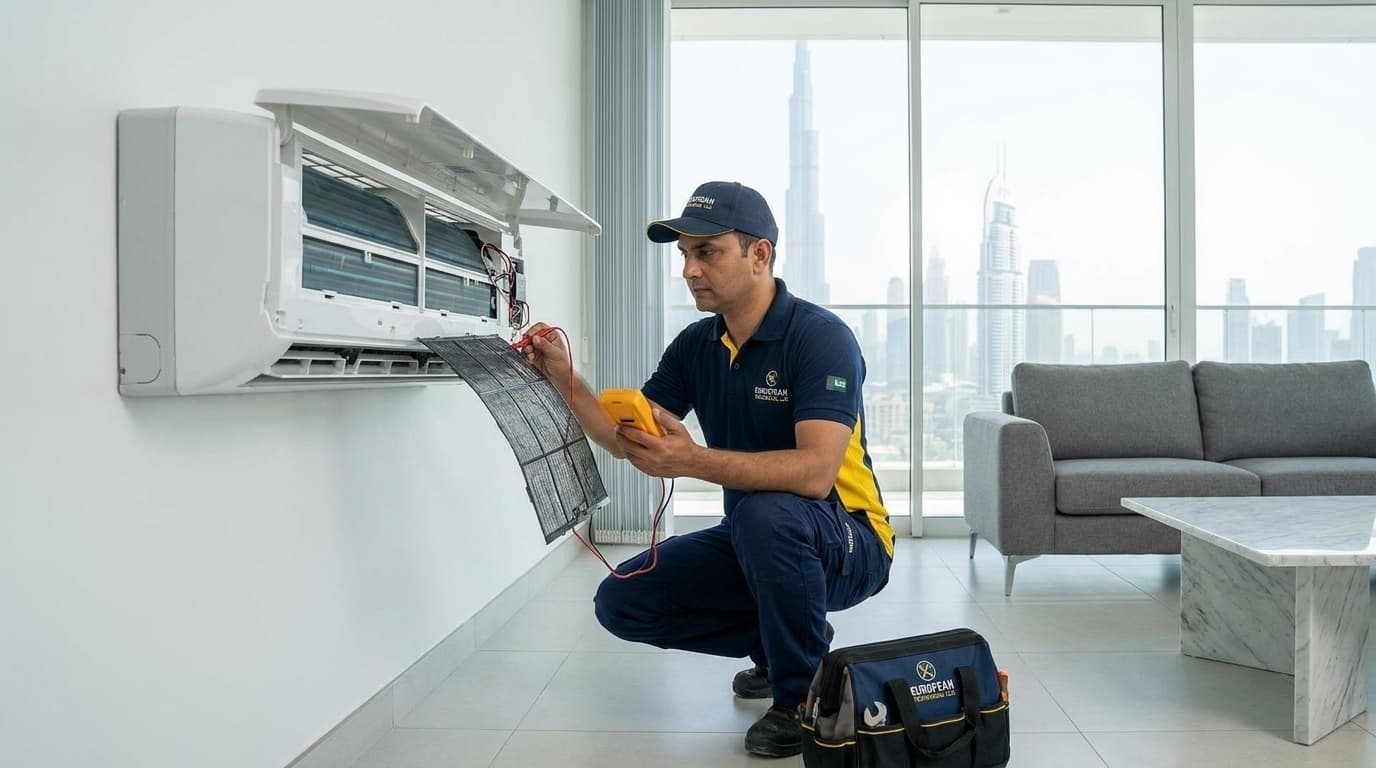
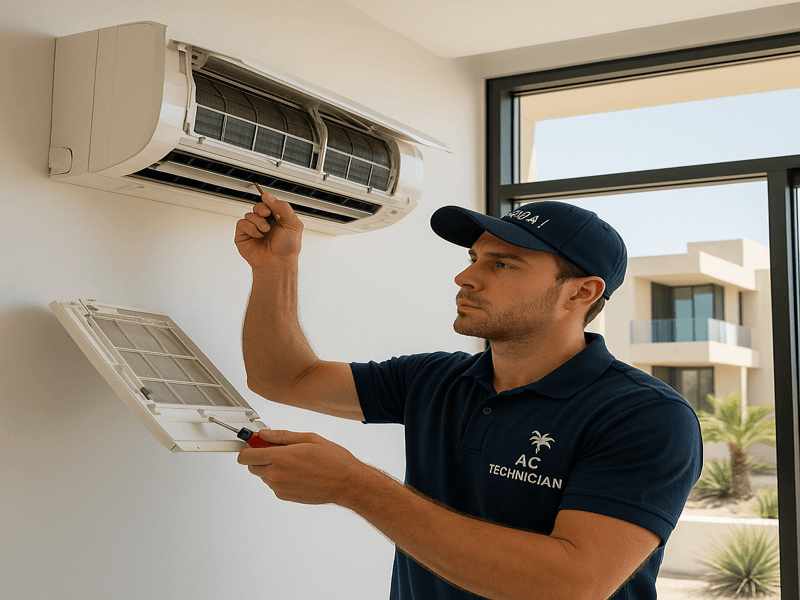
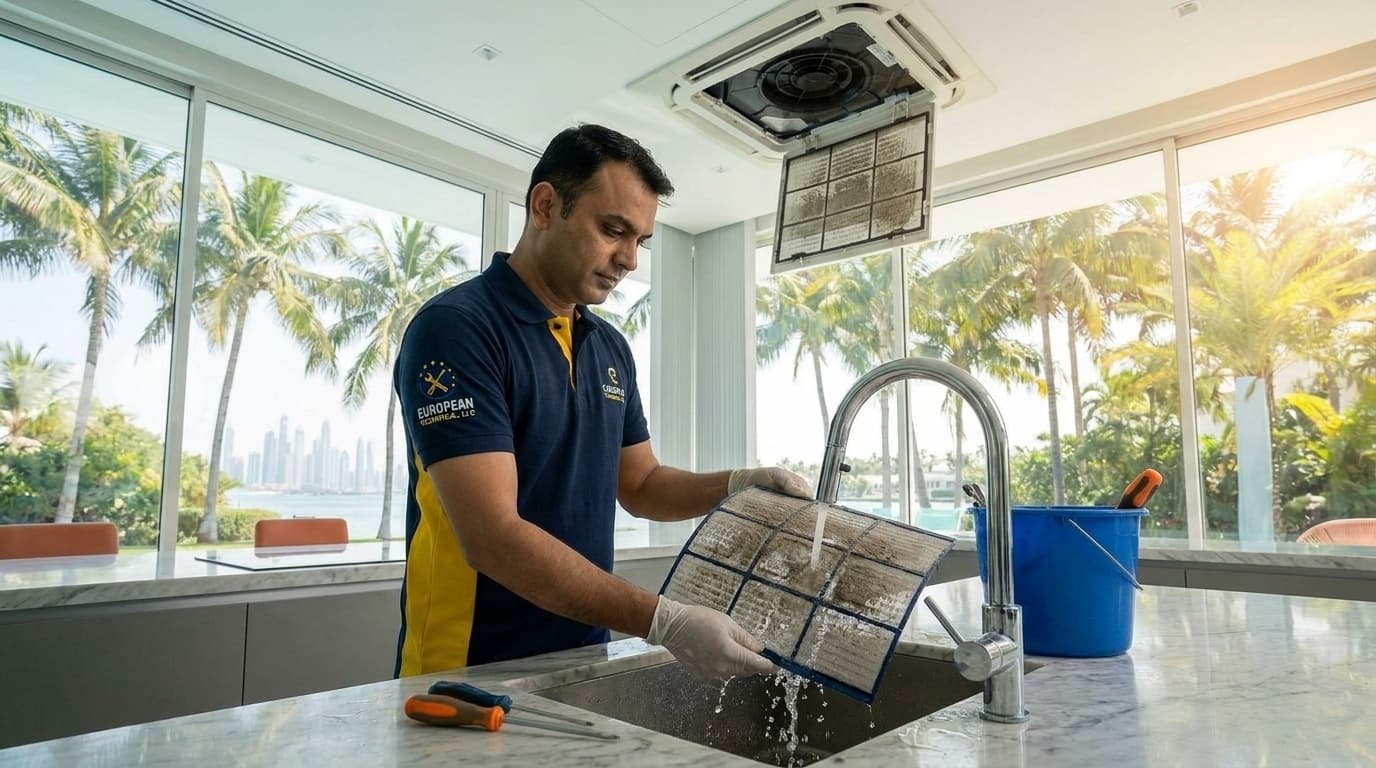
Weak airflow usually comes down to a handful of causes. A clogged filter is the most common, and the good news is that it is also the cheapest to fix. Dubai's dust, combined with fine sand that gets into everything during the windy season, chokes filters far faster than most owners expect. Beyond the filter, the culprits get more serious: a failing blower motor, a fan belt on its last legs, ductwork that has split or detached in the ceiling, or a frozen evaporator coil caused by low refrigerant.
That last one deserves attention. If you open the indoor unit and see ice on the coil, switch the system off immediately and call a technician. Running a frozen coil can crack it, and a coil replacement turns a routine service visit into a major repair.
Sign 2: Strange Noises, Loud or Subtle
A healthy split AC unit hums. That is it. Anything above and beyond the hum deserves a listen.
Different noises point to different problems, and experienced technicians can often diagnose the fault before opening the unit. A grinding or screeching sound usually means a motor bearing is failing, typically the blower fan or the condenser fan outdoors. A rattling noise often suggests loose screws, a detached panel, or debris caught in the outdoor unit, which is surprisingly common in villas where the condenser sits at ground level near plants. A clicking sound that repeats on start-up points to a relay or electrical component struggling. And a hissing sound can indicate a refrigerant leak somewhere in the line.
The mistake people make is waiting to see whether the noise goes away. Sometimes it does, because the failing part has now failed completely. A bearing that would have cost a few hundred dirhams to replace becomes a seized motor, an emergency call-out, and a sweltering night without cooling. If your AC has started making a sound you have not heard before, that is your cue.
Sign 3: Bad Smells From the Vents
Your nose is a surprisingly good diagnostic tool. When the air coming out of the vents smells off, there are three usual suspects in Dubai homes.
A musty, damp smell means moisture is sitting somewhere it should not be. Our humidity levels, especially in coastal areas like Dubai Marina and JBR, encourage mould and mildew growth on the evaporator coil, inside the drain pan, and along the ductwork. This is more than a smell issue. Mould spores circulate through the home every time the system runs, which is a genuine concern for anyone with asthma, allergies, or young children.
A burning or electrical smell is far more urgent. It can indicate overheating wiring, a failing capacitor, or a motor burning through its insulation. If you smell something burning from your AC, turn it off at the unit and get a technician out the same day. Electrical faults do not wait politely.
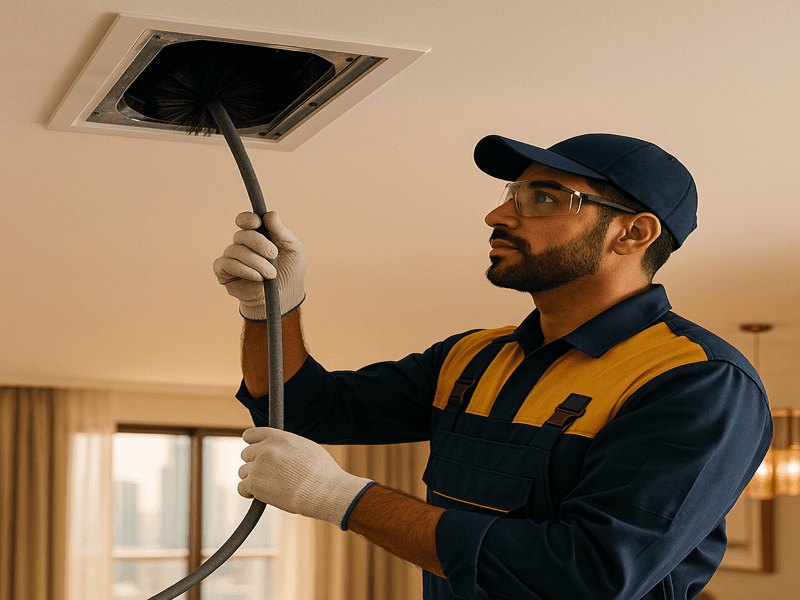
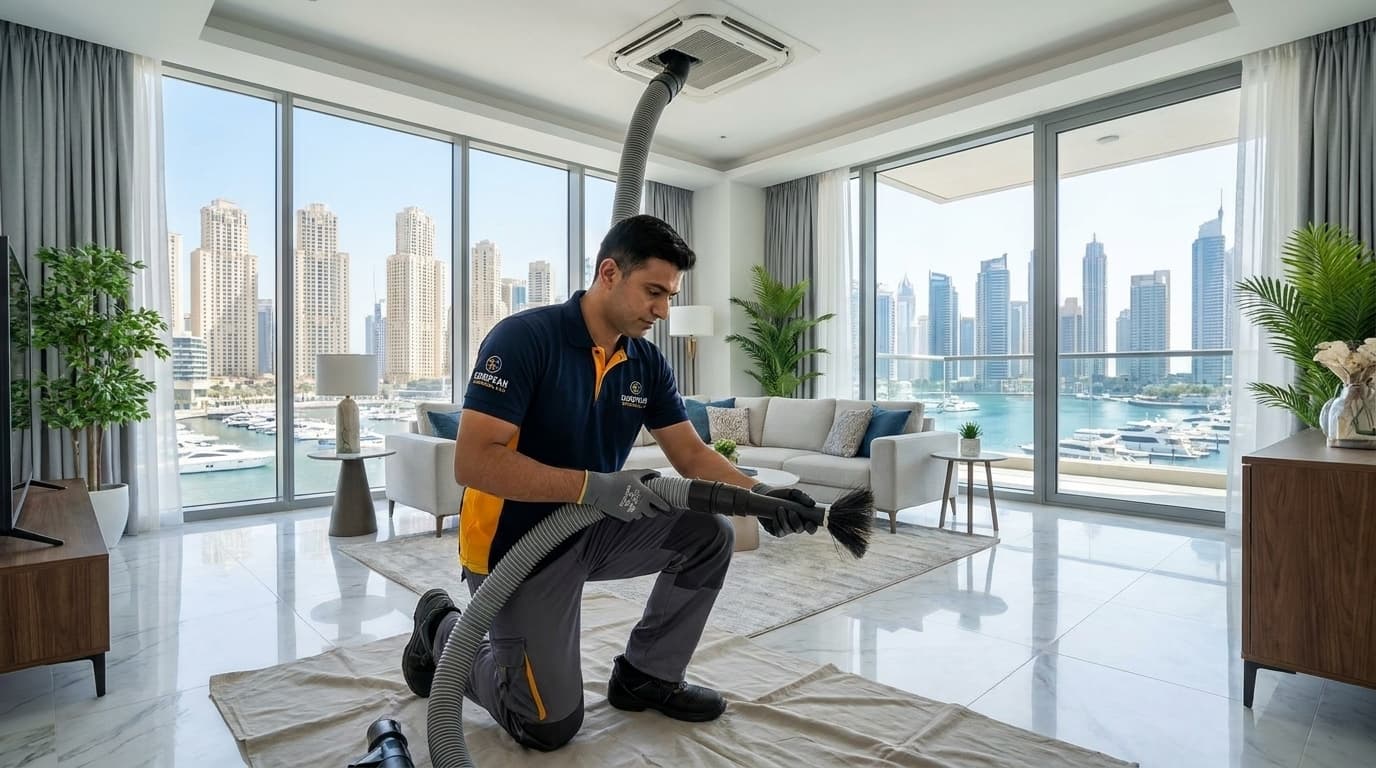
A stale or dusty smell, meanwhile, often points to accumulated dirt in the filters and ducts. The fix is straightforward, and it is one of the reasons we always recommend a professional AC service at least twice a year rather than a quick DIY filter rinse. A thorough service cleans the coil, the drain pan, and the blower, and it dramatically improves the air in the flat.
Sign 4: The System Cycles On and Off Constantly
Short cycling is the industry term for an AC that starts up, runs briefly, shuts down, then starts again a few minutes later. It is both a symptom and a cause of further damage, because every start-up places heavy stress on the compressor, the most expensive component in the entire system.
Several faults produce short cycling. An oversized unit cools the space too quickly and shuts off before it has properly dehumidified the air, which leaves the room feeling clammy even when the thermometer reads 22°C. A dirty condenser coil outdoors cannot shed heat efficiently, so the system hits its pressure limit early and trips off. A refrigerant leak alters the pressure balance in the system and forces early shutdowns. A failing thermostat or a corroded sensor misreads the temperature and cuts the cycle short.
You will notice short cycling on your DEWA bill before you notice it in comfort. A system starting repeatedly draws a surge of power each time, so a short-cycling unit can consume significantly more electricity while delivering worse cooling. If your bill has crept up without a change in your habits, your AC's behaviour is the first place to look.
Sign 5: Water Where It Should Not Be
Your AC removes a great deal of moisture from the air, and that water has to go somewhere. It travels along the condensate drain line and out of the building. When that line clogs with dust, algae, or debris, water backs up into the drain pan and eventually overflows.
In a villa, that shows up as a damp patch near the indoor unit or a stain spreading across the ceiling below. In an apartment, it can mean water dripping down into your neighbour's flat, which turns a maintenance issue into a negotiation with your building management and possibly your neighbours' patience.
The fix is usually simple for a technician: clear the drain line, flush it, treat it to slow regrowth, and check the pan for cracks. But left alone, a blocked drain corrodes the unit, stains ceilings, and feeds mould inside the wall cavity. If you see moisture anywhere near an indoor unit, treat it as urgent.
It is worth adding one related point here. Water quality and system hygiene in Dubai homes go hand in hand more than people realise. Just as Dubai Municipality advises that household water tanks be cleaned and disinfected at least twice a year, your AC system deserves the same twice-yearly discipline. Many residents bundle their AC service with professional cleaning of the water tank, since both jobs address the same underlying reality: heat, dust, and humidity in this climate build up residue faster than most people expect.
What Happens If You Ignore the Signs
Air conditioners rarely fail without warning. What actually happens is that the warnings arrive quietly, one at a time, and each one is easy to rationalise. The noise is probably nothing. The smell will fade. The room cools eventually, it just takes a while.
Then, on a day when the outside temperature is nudging 45°C, the compressor quits. In that moment you discover the second problem with AC failure in Dubai: timing. Everyone else's unit that has been limping through the summer fails around the same weeks, and reputable companies are booked solid. The cheapest available technician may be the one who was available, which is not the same thing at all.
The financial argument is just as strong. A service visit that catches a failing capacitor costs a fraction of what a compressor replacement costs, and an emergency call-out at midnight in August carries a premium that a scheduled appointment never will. Preventive attention is not an upsell. It is the difference between a system that lasts and a system that fails a year or two early.
Getting Ahead of Problems With a Maintenance Plan
Rather than watching for symptoms, many Dubai property owners prefer to prevent them entirely. An annual maintenance contract puts your AC on a schedule: filters, coils, drain lines, refrigerant pressures, and electrical connections all checked and cleaned before the summer peak, with a follow-up visit later in the year. For landlords with tenants in Business Bay or landlords renting out villas in Arabian Ranches, it also removes the midnight phone call when a tenant's AC dies in July.
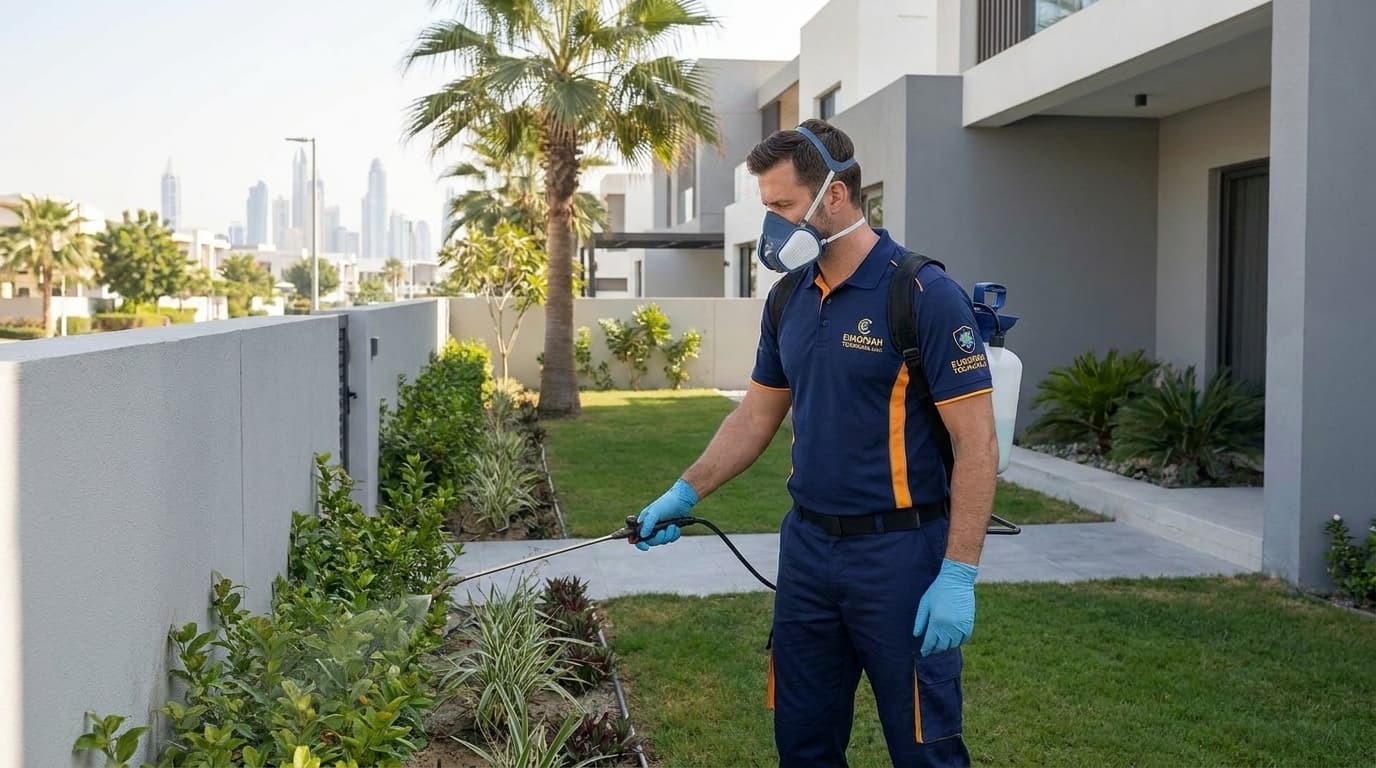
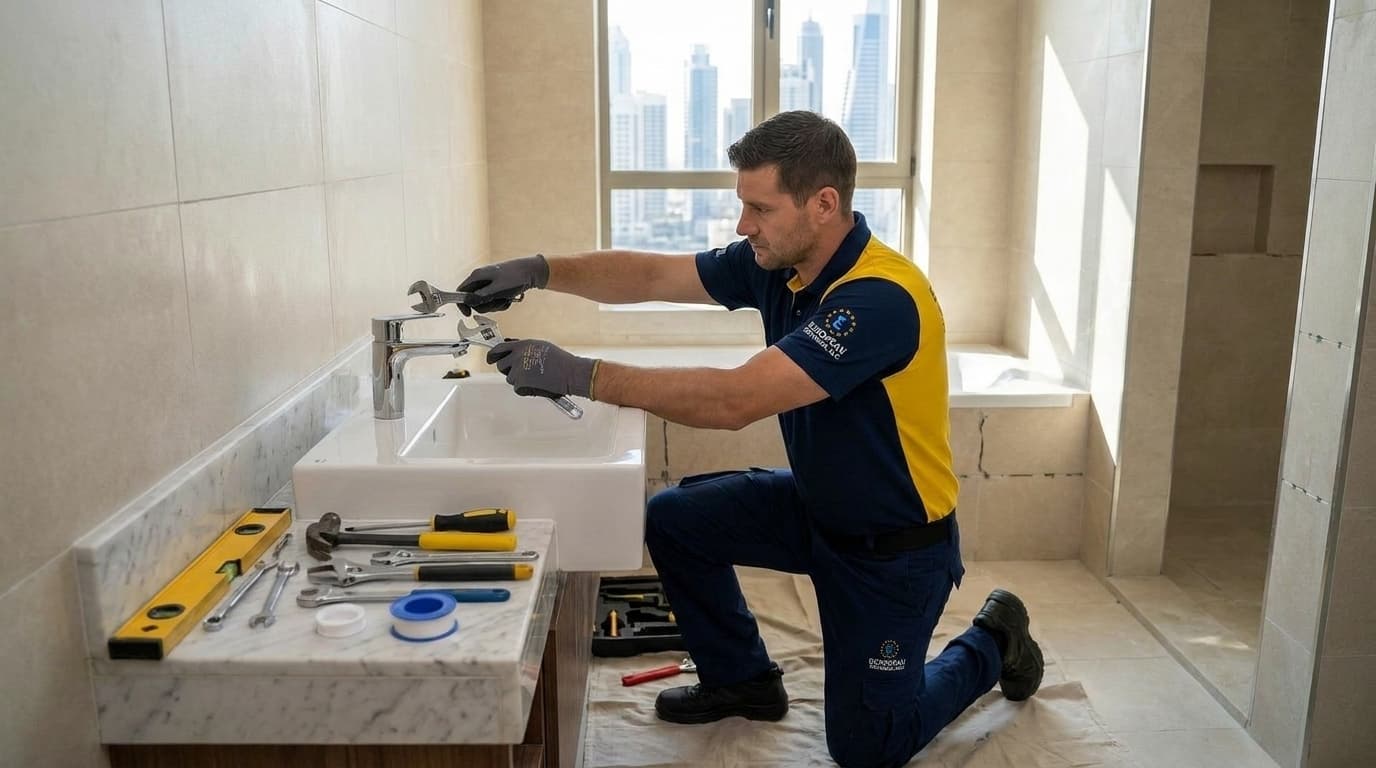
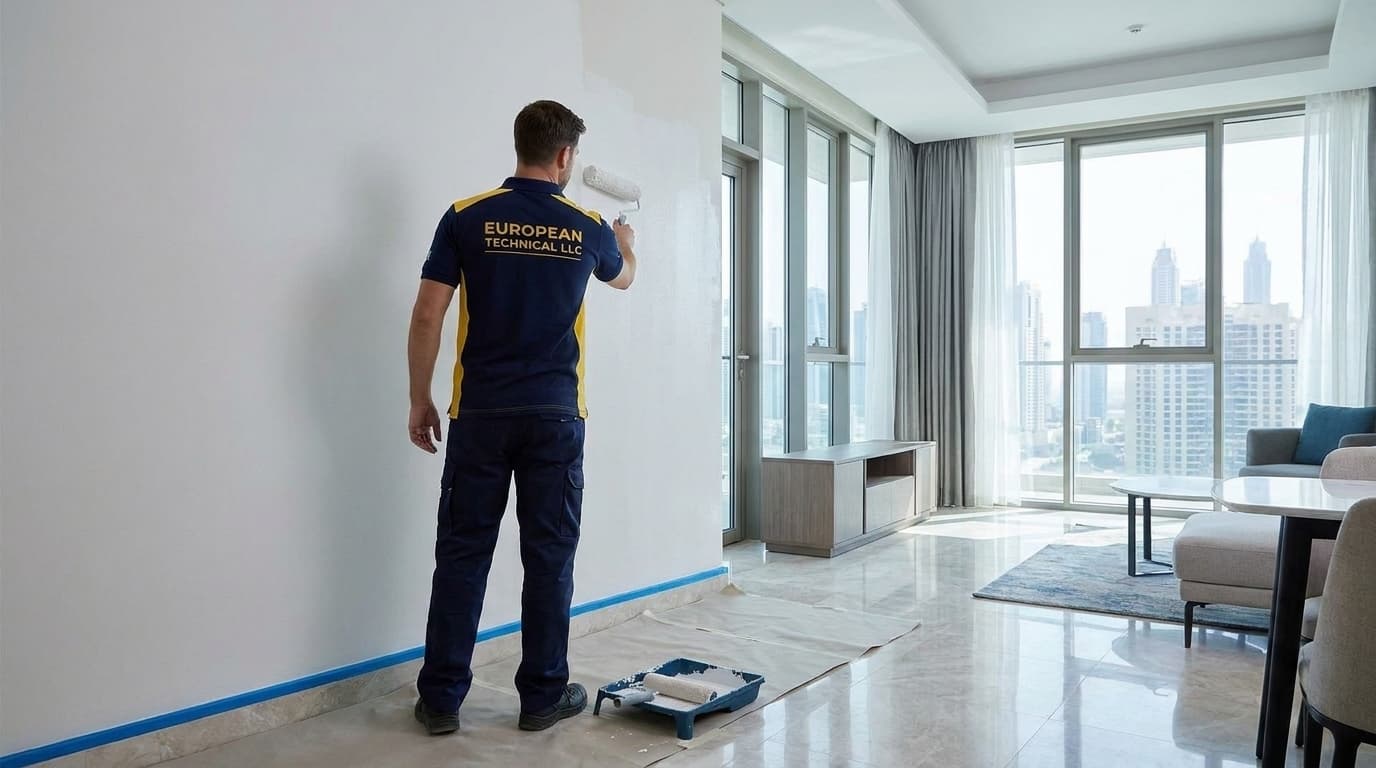
Small repairs often sit alongside the AC work. A technician notices a loose vent cover, a cracked seal around a window, or a wall patch that needs attention after a drain leak. Our handyman team handles those follow-on jobs in the same visit, so the ceiling stain from an overflow gets repainted rather than left as a permanent reminder.
If you run a business, particularly anything involving food service, the stakes are higher still. Dubai Municipality's food safety guidance treats water tank hygiene as a compliance matter, with tanks cleaned and disinfected at least twice a year, and commercial setups with high water usage generally need attention more often, every three to four months, to keep pace with faster residue buildup. The same logic applies to your cooling: commercial AC systems under constant load need more frequent care than a bedroom unit switched on after work.
FAQ
How often should I service my AC in Dubai?
Twice a year is the practical baseline for most Dubai homes, ideally once before summer and once after the peak season. Heavily used systems, older units, and commercial properties benefit from more frequent attention. If it has been more than a year since your last professional service, book one before the next heatwave rather than during it.
Can I just clean or replace the filter myself?
Yes, and you should. Rinsing washable filters every few weeks during heavy-use months keeps airflow healthy and lowers strain on the blower. But a filter clean does not reach the coil, drain pan, or blower wheel, which is where the deeper grime accumulates. Filter maintenance is a supplement to professional servicing, not a replacement.
Why does my AC smell musty even after cleaning the filters?
Because the smell usually is not coming from the filter. Mould grows on the evaporator coil and in the drain pan, where constant condensation provides moisture and trapped dust provides food. A proper chemical coil clean and drain treatment solves it. If the mustiness persists, have the ductwork inspected.
Will fixing a small refrigerant leak actually save me money?
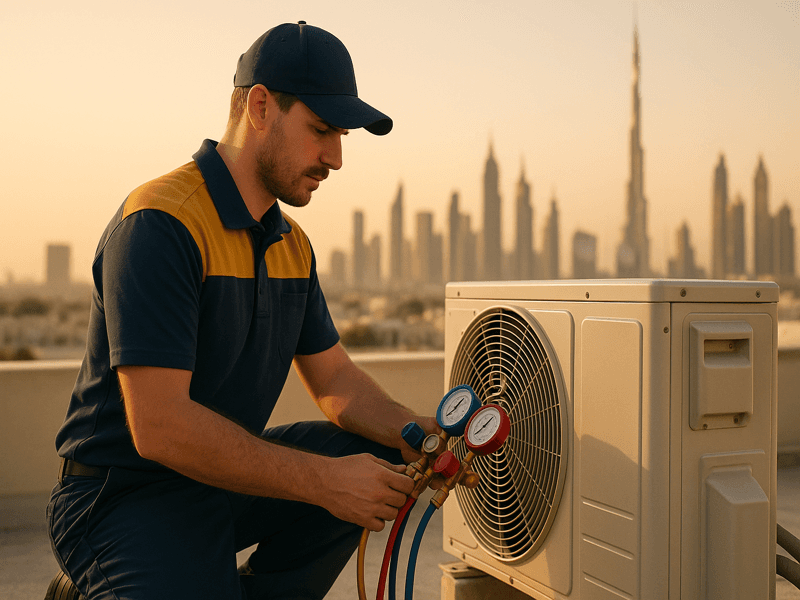
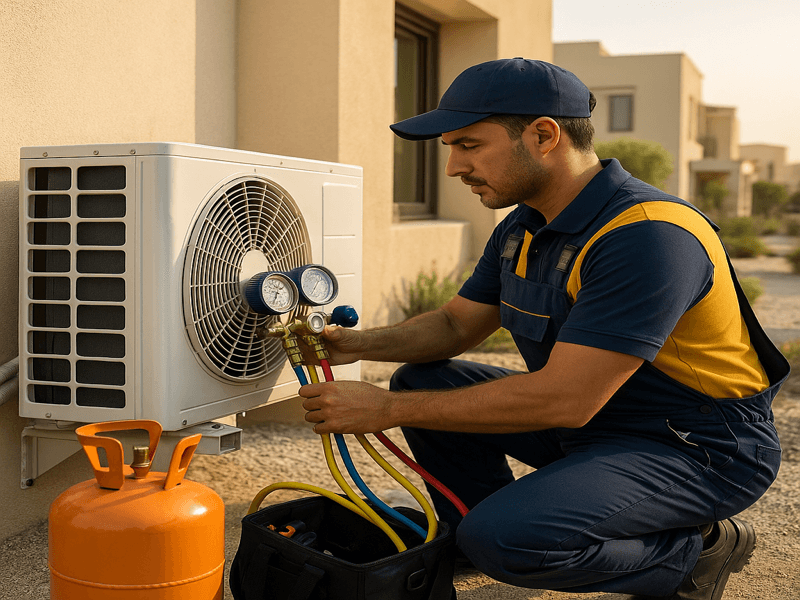
Usually yes. A system running low on refrigerant works harder for longer to hit the same temperature, which raises your DEWA consumption and stresses the compressor. Recharging gas and sealing the leak early is far cheaper than replacing the compressor the leak eventually kills. Note that recharging without fixing the leak wastes money, as the gas simply escapes again.
How long does a typical AC repair take?
Most residential repairs are completed in a single visit of one to three hours, including common faults like capacitor replacements, drain clearing, and blower motor swaps. Compressor replacements and coil work take longer and may involve ordering parts. A diagnostic visit comes first so you know the cost before committing.
Is AC repair worth it, or should I replace the unit?
As a rule, if a repair costs well under half the price of a new system and your unit is under ten years old, repair it. Older units that need repeated repairs, use older refrigerant, or cool poorly even when serviced are candidates for replacement. A technician can give you an honest comparison rather than pushing you either way.
Act Before the Peak, Not During It
Every technician in Dubai knows the pattern. June is quiet. July is chaos. The residents who suffer least are the ones who read their AC's early warnings in April and May, booked a service, and spent the summer barely thinking about their cooling at all.
If any of the five signs above sound familiar, weak airflow, strange noises, bad smells, constant cycling, or water where it should not be, do not wait for the failure. European Technical serves homes and businesses across Dubai, and we would rather catch your fault small than replace your compressor large.